Let's talk about the side effect nobody warns you about
You start an SSRI. Your anxiety drops. Your mood stabilizes. And then about two weeks in, you notice you can't feel much of anything down there anymore. It's like someone turned down the volume on your entire body. This isn't in your head. It's real, it's common, and it's one of the most frustrating parts of mental health treatment that doctors barely mention.
Here's what's actually happening, and why lemon clitoral vibrators work better than you'd expect for getting sensation back.
How SSRIs flatten sensation in the first place
SSRIs work by increasing serotonin in your brain. That's the whole point. But serotonin doesn't just live upstairs in your head. It's everywhere in your body, including your genitals. More serotonin floating around means slower nerve signals, delayed arousal, and that characteristic numbness that makes orgasm feel either impossible or weirdly muted.
The specifics: SSRIs suppress the neurotransmitter systems that fire during arousal and orgasm. You need dopamine and norepinephrine to spike for pleasure to register sharply. SSRIs keep all of that dampened. Your clitoris still has all its nerve endings. Your brain is still capable of pleasure. But the communication between them gets slower and quieter.
About 40-60% of people on SSRIs report sexual side effects. That's not a small number. And it's not something that usually improves on its own after a few weeks. It sticks around as long as you're on the medication.
Why standard vibration alone doesn't cut it anymore
When sensation is flattened, regular vibrators that rely on steady buzzing often feel like background noise. Your numbed nerve endings need more stimulation to register anything at all. You can turn up the intensity, but that leads to fatigue and frustration. You need a different kind of stimulation entirely.
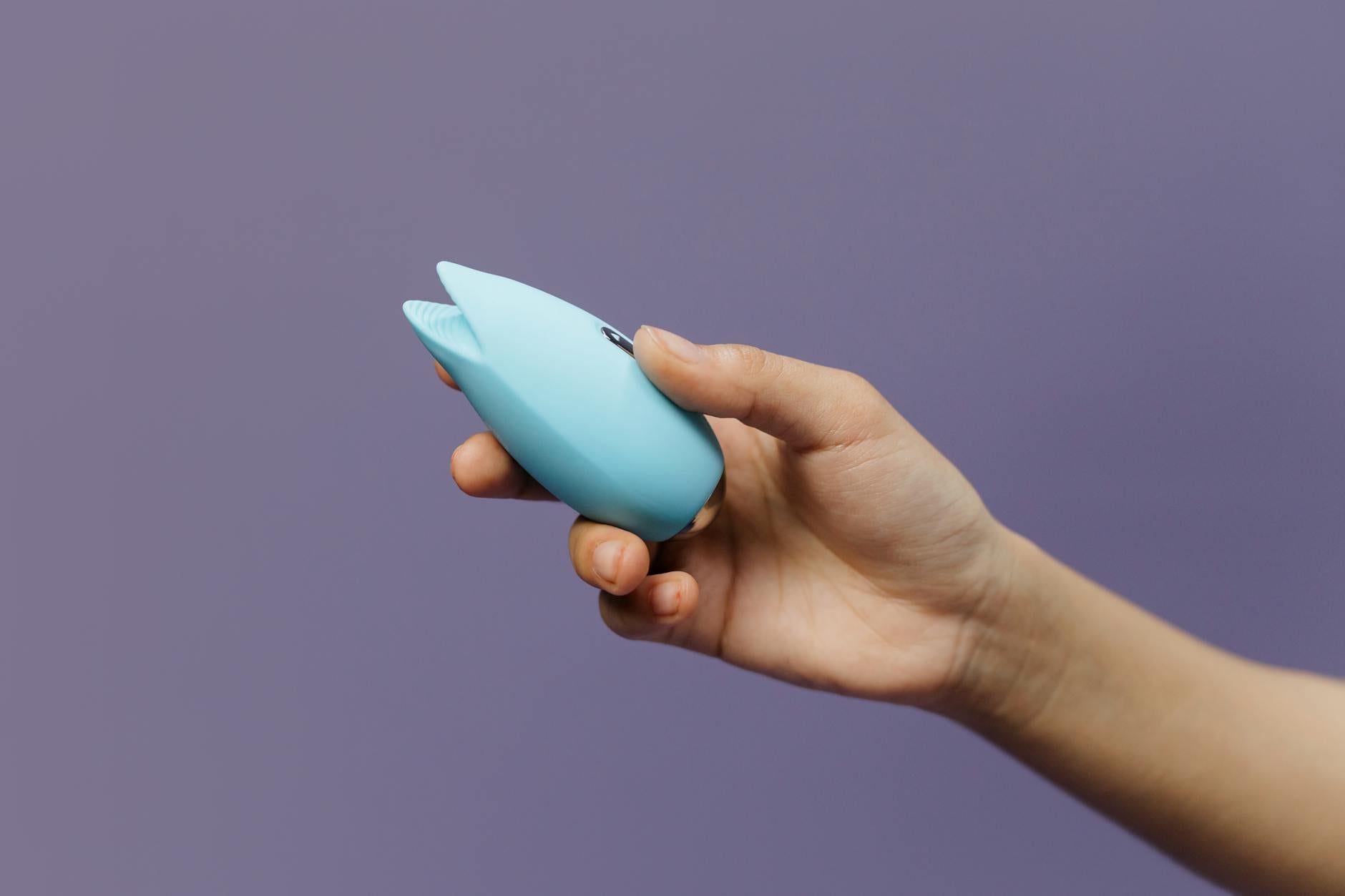
This is where the mechanism of lemon vibrators changes the game. Suction-based toys like the Lem work through a completely different pathway than traditional vibration. Instead of buzzing, they use rhythmic pulsing and gentle suction to stimulate the clitoris. This engages more nerve endings simultaneously and creates a sensation that's harder for your flattened nervous system to ignore.
The suction pattern creates buildup and release. Your body recognizes it as distinct. Even when overall sensation is muted by SSRIs, the pressure differential feels sharper and more present than vibration alone.
The specific settings that work best on SSRI flatness
If you're using a lemon clitoral vibrator while on an SSRI, don't start where you normally would. Start at the lowest setting and stay there for at least five minutes. Your nervous system needs time to register what's happening.
Then work up gradually. Most people on SSRIs find that the mid-range patterns (usually modes 4-7 on a lem vibrator) feel more intentional than the gentlest settings. The gentlest patterns can feel too faint when sensation is already dampened. The most intense settings often feel overwhelming before they feel good.
The sweet spot tends to be steady, medium-intensity suction with a slight pulse. Think rhythm, not raw power. Rhythm gives your brain something to anticipate. That anticipation is often what finally breaks through the numbness.
Timing matters more than you think
When are you taking your SSRI? That affects everything. If you take it in the morning, you might find that evening or night is when sensation comes back most reliably. Most SSRIs peak in your system about 4-8 hours after dosing, but the side effects tend to be most pronounced around peak levels.
If you're consistently numb in the morning but slightly more sensitive at night, plan accordingly. Use your lemon suction toy during the window when your body naturally has more sensation available. You're not fighting chemistry. You're working with it.
Same thing with your cycle, if you menstruate. Sensation often returns a bit more in the follicular phase. Not dramatically, but noticeably. It's worth tracking.
The mental side of numbness on SSRIs
Here's the thing that gets overlooked: part of the flatness is neurological. Part of it is psychological. You start an SSRI expecting side effects. You notice your body isn't responding. Then you get in your own head about it. Anxiety about whether pleasure will ever come back can actually make things worse.
Using a lemon vibrator isn't just about physical stimulation. It's about reestablishing the feedback loop between your body and your brain. When you use it consistently, even if nothing amazing happens, you're reminding your nervous system that pleasure is still possible. That matters psychologically.
Many people report that the first time they feel anything resembling their old sensation response, it's a small thing. A flutter. A moment of genuine feeling cutting through the numbness. That's worth celebrating because it means the pathway is still there.
When to talk to your doctor about switching or adjusting
If you've been on the same SSRI for 8-12 weeks and the sexual side effects haven't budged at all, that's a conversation worth having with your prescriber. Different SSRIs have different sexual side effect profiles. Sertraline and paroxetine tend to be worse than others. Bupropion, which isn't an SSRI but is often used alongside them, actually has the opposite effect and can improve sensation.
You might also ask about dose adjustment. Sometimes a slightly lower dose maintains the mental health benefit while reducing sexual side effects. That's not always possible, but it's always worth asking about.
The worst thing you can do is just accept flatness and stop trying. Your prescriber needs to know this is affecting your quality of life. Mental health medication should give you your life back, and that includes pleasure.
Building back sensation with consistent use
This isn't something that fixes itself overnight. But with consistent use of a lemon vibrator over 2-4 weeks, many people notice their sensitivity slowly returning. Not all the way back to pre-SSRI levels, often, but noticeably better.
Consistency matters more than intensity. Using your suction vibrator 3-4 times a week seems to work better than occasional intense sessions. You're essentially retraining your nervous system to register sensation again. That takes repetition.
Also: be patient with yourself if you don't orgasm. That's not the goal right now. The goal is feeling something real. Feeling is the foundation. Orgasm can come later.
The role of patience and communication
If you have a partner, let them know what's happening. This isn't a reflection on them or your attraction. It's a medication side effect, and it's temporary or at least improvable. Using a lemon clitoral vibrator can actually be a couples activity. Many people find that partnered suction toy use helps rebuild intimacy while they're dealing with sexual side effects. It removes the pressure of traditional sex while keeping connection alive.
If you're solo, you're giving yourself permission to explore what works for your body right now, not what worked before. That's valuable.
People also ask
Do lemon vibrators work if you're on other antidepressants besides SSRIs?
Yes, though the effect is different depending on the medication. Bupropion users rarely need extra help because that medication actually increases arousal. Tricyclic antidepressants can cause similar numbness to SSRIs. SNRIs (like venlafaxine) sometimes have fewer sexual side effects than SSRIs but not always. If you're on something other than an SSRI and noticing flatness, a lemon suction vibrator can still help. The mechanism is the same: you're providing stronger stimulation to overcome the medication's dampening effect.
How long does it take to feel sensation returning?
Most people report noticing some improvement within 2-4 weeks of consistent use. For some it's faster, for others it takes 6-8 weeks. The first sign is usually subtle: a moment where something actually registers, where you feel a flutter or a pulse more clearly than you have in weeks. That's the sign that your nervous system is waking back up. From there, sensitivity usually improves gradually.
Can you use a lemon vibrator every day if you're on SSRIs?
Yes. Unlike the numbness itself, using a suction toy won't make things worse. Some people use them daily when they're in the acute flatness period. Others find that 3-4 times weekly is enough to maintain improvement. Listen to your body. If it feels good and you're enjoying it, daily use is fine. If you feel overstimulated or desensitized, back off to a few times a week.
What if you switch SSRIs and the numbness improves on its own?
Then you might not need the lemon vibrator anymore, though many people keep using it because they genuinely enjoy it. If you do switch medications and sensation comes back, that's great. If it doesn't, the techniques and tools that worked on your first SSRI will work again. The lemon suction mechanism doesn't become less effective just because you tried a different pill.
Is it normal to feel frustrated or sad about sexual side effects?
Completely normal. Your mental health medication saves your life. And it simultaneously takes something away that matters to you. Both of those things are true at the same time. It's okay to feel frustrated about that tradeoff. Talking to a therapist about it, especially one who understands sexual side effects as a legitimate concern, can help. You're not being ungrateful for your medication. You're being honest about the cost.
Should you stop taking SSRIs because of sexual side effects?
No. Not without talking to your doctor first. If your SSRI is helping your mental health, stopping it to restore sensation usually backfires. You end up with sexual dysfunction and depression. That's worse. The real solution is finding the medication, dose, or combination that gives you mental health stability plus acceptable sexual function. That exists. It just sometimes takes some adjusting to find it.
The bottom line
SSRIs flatten sensation. That's a real side effect, not something you're imagining or doing wrong. Lemon clitoral vibrators work because they use suction instead of vibration, which engages your already-dampened nervous system more effectively. Consistent use over 2-4 weeks usually helps sensitivity return. And talking to your doctor about whether your specific medication is the best fit for you is always worth doing.
Your mental health matters. Your pleasure matters too. You don't have to choose between them.
Sources
[1] Clayton, A. H., Alkis, A. R. (2003). "Sexual dysfunction associated with depression: characteristics and treatment." Current Psychiatry Reports, 5(6), 489-496.
[2] Montejo, A. L., et al. (2010). "Sexual dysfunction in patients treated with antidepressants." The Journal of Clinical Psychiatry, 71(1), 1576-1588.
[3] Segraves, R. T., Segraves, K. B. (1995). "Human sexual response and antipsychotic medications." Psychiatric Annals, 25(3), 144-153.