Perimenopause changes the physical reality of pleasure
Here's what nobody tells you: perimenopause doesn't kill desire. It changes the rules of how your body gets there.
For roughly a decade before your final period, estrogen and progesterone start their goodbye tour. They spike and plummet unpredictably. Testosterone shifts too (yes, people with ovaries have it, and it matters wildly for arousal). The result isn't a flat line. It's chaos that feels a lot like malfunction when it's actually just transition.
Your clitoris gets fewer blood vessels flooding it on demand. Tissue thins. Lubrication happens slower or sometimes not at all. The pelvic floor loses some of its elastic support. Your nervous system gets jumpier. Orgasms, if they show up, might feel different in shape, intensity, or timing.
The kicker: your brain's pleasure circuits are still there. The nerve endings are still there. The capacity for sensation is still there. What's gone is the hormone-fueled shortcut your body used to take.
Why sensation feels muted (and what that's actually about)
Think of perimenopause arousal like a lock that suddenly changed. You've got the same key, but the mechanism works differently now.
During your reproductive years, a rush of estrogen primed blood vessels to dilate quickly. Arousal was a steep ramp. You felt need urgently. Your body responded in minutes.
Now? That hormonal primer is inconsistent. Some days your body floods your clitoris with sensation. Other days it's sluggish. Some cycles, nothing happens at all. This isn't weakness. It's a different operating system.
Many of my clients describe it as feeling numb or broken. What's actually happening is slower, softer activation. Your clitoris still has every nerve it ever had. The stimulation just needs to work with your new baseline instead of against it.
Here's the useful part: suction works better than ever at this particular inflection point.
Why lemon vibrators and suction-style toys become your secret weapon
Traditional vibration requires a certain amount of blood flow and tissue sensitivity to register. When both of those are variable during perimenopause, straight vibration can feel weak or miss the mark entirely.
Suction is different. It works through gentle negative pressure rather than pure vibration. That pressure stimulates a broader area of nerve endings at once, not just the spot directly under the vibrator. For clitoral tissue that's already thinner and less responsive to direct pressure, suction creates a sensation that registers even when arousal is sluggish.
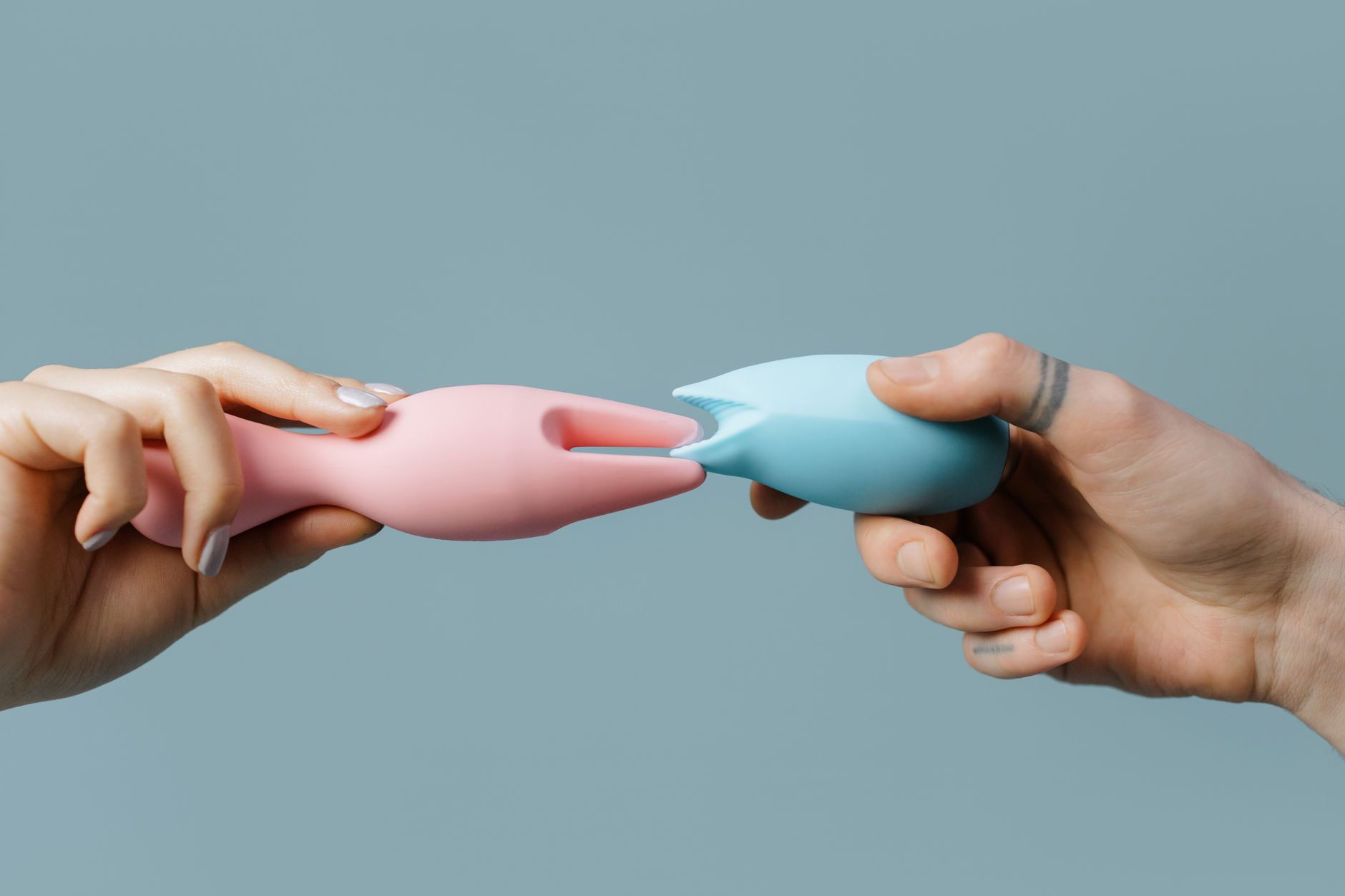
Lemon clitoral vibrators (like the Lem) combine that suction with gentle pulsing, which adds another layer. You get the broad-spectrum nerve activation of suction plus the rhythmic engagement of gentle vibration. Together, they work with your perimenopause body rather than demanding it perform on old terms.
The result: many people report that suction-style toys help them access orgasm faster during perimenopause than they could with vibrators alone. Not because the toy is inherently stronger, but because it matches what your body is actually capable of now.
What shifts when you start using lemon vibrators during perimenopause
The first thing most people notice is a different kind of sensation. Suction pulls slightly, which creates pressure and release rhythmically. If you've only used direct vibration before, it feels almost foreign at first. Warmer. Rounder. Less pointed.
Second, you'll likely need to warm up longer. Budget 20-30 minutes instead of 10. This isn't a flaw in your body. Perimenopause just means arousal builds like a slower sunrise instead of a flipped switch. That extra time is actually valuable. You get more chance to notice what feels good, adjust positioning, and let anticipation build.
Third, intensity preference often shifts. Many people in perimenopause find that lower settings on a lemon vibrator feel more effective than high settings. This is partly because lower settings create steadier suction, and partly because your nervous system is more sensitive to consistent sensation than erratic intensity right now. Start at pattern 1 or 2. You can always go up. You can't un-overwhelm your clitoris midway.
Fourth, lubrication becomes your new friend. Not because you're broken, but because perimenopause tissue thins and lubrication can become inconsistent. Water-based lube makes everything smoother, reduces any micro-friction, and honestly just feels better. This is true especially if you're early in perimenopause and tissue is still relatively resilient. Later in the transition, lube becomes even more important.
The hormonal timeline and what it means for your pleasure practice
Early perimenopause (ages 40-43 for many people): Your cycles might still be somewhat regular, but energy and arousal feel unpredictable. Some months, sex is easy. Other months, you can't access that feeling at all. This is partly hormones, partly the mental load of not knowing what your body will do.
Middle perimenopause (ages 43-47): Periods might skip for months, then return. Mood swings intensify. Hot flashes show up. Sensation becomes more consistently variable. Your clitoris might feel genuinely numb some days. Suction toys help most at this stage because they work even when sensitivity is flatlined.
Late perimenopause (ages 47-52): Periods are rare or gone. Hormones have mostly stabilized at their new, lower baseline. The wildness settles. Sensation stabilizes too. Not back to 25, but consistent and workable. Many people find they actually enjoy sensation more at this point because the unpredictability is gone.
At every stage, lemon vibrators meet you where you are. During the chaos, they work even when your body won't respond to gentler touch. During the stabilization, they're still the most efficient way to access pleasure without friction or fatigue.
The mental and relational piece (because it's half the puzzle)
Let's be real: perimenopause is not just biology. It arrives carrying grief, identity shifts, and relationship friction.
You might be mourning your old body. Your partner might be confused by the change. You might be juggling aging parents, career demands, or empty nest anxiety on top of hormonal chaos. All of that gets filed into your nervous system under "not safe to relax right now."
When your brain is in that state, even your clitoris gets the memo. Sensation gets smaller. Desire shrinks. Arousal takes even longer to build.
Here's the thing: a lemon vibrator can't fix your relationship or your work stress or your anxiety about aging. But it can give you back a reliable way to access your own pleasure independent of all that noise. That matters.
Using a clitoral vibrator solo during perimenopause isn't avoidance. It's reclamation. You're literally rebuilding the neural pathways between your brain and your body that say pleasure is still available, even when everything else feels uncertain.
Making it work: your actual perimenopause protocol
Three things that genuinely help.
First: consistency over intensity. Use your lemon vibrator regularly, not just when you're partnered and trying to perform. Solo exploration teaches your body what works now. That knowledge transfers into partnered sex too.
Second: make lubrication automatic. Don't wait for your body to tell you it needs it. Use water-based lube every time, starting with your first use. Perimenopause tissue is thinner. That affects lubrication unpredictably. Lube removes the guesswork and the friction.
Third: let go of speed. The old template was: get turned on, have orgasm, done. Now the template is: spend time noticing what feels good, let arousal build in its new shape, stay curious instead of goal-focused. This isn't settling. It's often actually more satisfying.

Photo by Hanna Brovko on Pexels
What happens if you ignore the shift
This is the part where I get clinical for a second, because it matters.
If you move through perimenopause without exploring what your body is actually capable of now, two things tend to happen. First, your nervous system learns that pleasure is getting harder. That becomes your new normal. Second, you might miss the window where rebuilding is easiest. Later in perimenopause and menopause, some people struggle more to access sensation because they spent years telling themselves it wasn't available.
Suction-style toys work best during perimenopause, when tissue is still relatively resilient but sensation is changing. Starting then means you're working with your body's transition, not against it. If you wait until post-menopause, when tissue has thinned more, you might need different tools or a longer rebuild.
That's not a judgment. It's just how the biology works. Starting now, while you're in the shift, is easier.
When to loop in a medical provider
If sex starts hurting, stop and call your doctor. Perimenopause shouldn't create pain. Genitourinary syndrome of menopause (GSM) is real and shows up through dryness, pain, or burning. It's also totally treatable with topical estrogen cream or systemic hormone therapy.
If you've lost all desire and it's not coming back after a few weeks of experimenting, that's worth discussing with someone. Could be hormonal. Could be depression or thyroid issues. Could be relationship stress. Could be medication side effects. A good provider can help you sort it.
If you're using a lemon vibrator regularly and sensation still isn't improving after 3-4 weeks, talk to your doctor too. Sometimes there's an underlying issue (thyroid, depression, medication interaction) that needs attention.
The truth about perimenopause pleasure
Okay so here's what I want you to know in your bones: perimenopause is not the beginning of the end. It's a genuinely disorienting middle chapter where the rules of your body's pleasure response change, and you get to learn a new system.
That system is often richer, actually. When you're not chasing the adrenaline rush of youth hormones, when you're not performing for a partner or a cultural script, when you're just exploring what feels good on your terms now. That's where deep satisfaction lives.
A lemon clitoral vibrator is just a tool. But it's a tool that works with your perimenopause body instead of demanding it stay the same. That's the whole game.
Start now. Use regularly. Stay curious. And know that what you're experiencing is normal, workable, and often actually better than you think.
People also ask
Can perimenopause numbing reverse on its own?
Sometimes yes, sometimes no, and honestly it depends on whether you're talking about hormonal numbness or the numbness that comes from stress and disconnection. Hormonal numbness often improves once you stabilize on the other side of perimenopause, around 12 months after your final period. But that can take years. Numbness from stress or disconnection usually requires active rebuilding, not just time. Using tools like lemon vibrators alongside relationship work or solo exploration tends to reverse that faster than waiting does.
Is suction safer than vibration during perimenopause?
Neither is inherently safer, but suction is gentler on thinner tissue. Direct vibration on skin that's already thinned by hormonal shifts can create micro-friction or irritation for some people. Suction spreads stimulation across a wider nerve bed and uses pressure instead of surface friction. For perimenopause specifically, suction-style toys like lemon clitoral vibrators tend to feel more comfortable and effective. That said, everyone's different. If straight vibration still works for you, use it.
Should I use lemon vibrators with my partner during perimenopause?
Absolutely, if you both want to. But I'd recommend exploring solo first. That way you learn what works for your body now without the pressure of partner performance. Once you know what helps you, bring that knowledge into partnered sex. You can use the toy together, or you can share what you've learned about longer warm-up times and what sensation patterns work best. The conversations usually matter more than the toy itself.
How long does it take for sensation to improve after starting a lemon vibrator?
Most people notice a difference within 2-3 uses. That might just be relief that something works when other things don't. Deeper improvement, where access to sensation becomes easier and more consistent, usually takes 3-4 weeks of regular use. But perimenopause is variable, so your timeline might be different. The key is consistency, not intensity.
Can lemon vibrators help if I'm on hormone therapy?
Yes. Even on HRT, some people experience sensation changes because the hormones are synthetic and distribute differently than your body's natural hormones. Lemon vibrators work alongside HRT, not against it. They might actually feel more effective once you stabilize on HRT because your sensation baseline becomes more predictable.
What if I've never used any toy and I'm nervous about starting during perimenopause?
That's fair, and it's common. Start with the lowest setting. Spend time just noticing the sensation without pressure to do anything specific. You can read more about how to start using lemon vibrators if you're nervous about suction. Many people in perimenopause report that gentle exploration with a tool actually helps rebuild confidence in their body, which translates into better sensation over time.
Moving forward
Perimenopause isn't a diagnosis. It's a season. Your body hasn't broken. The rules have just changed.
Lemon vibrators work during this transition because they match what your body can actually do right now. Lower pressure, suction-based stimulation, and the flexibility to work at whatever pace you need. That's not a compromise. It's strategy.
Start exploring now, while you're in the thick of it. Your future self, on the other side of perimenopause, will thank you for not waiting. If you have questions or want to talk through what your specific situation looks like, I'm here. Reach out at /contact.