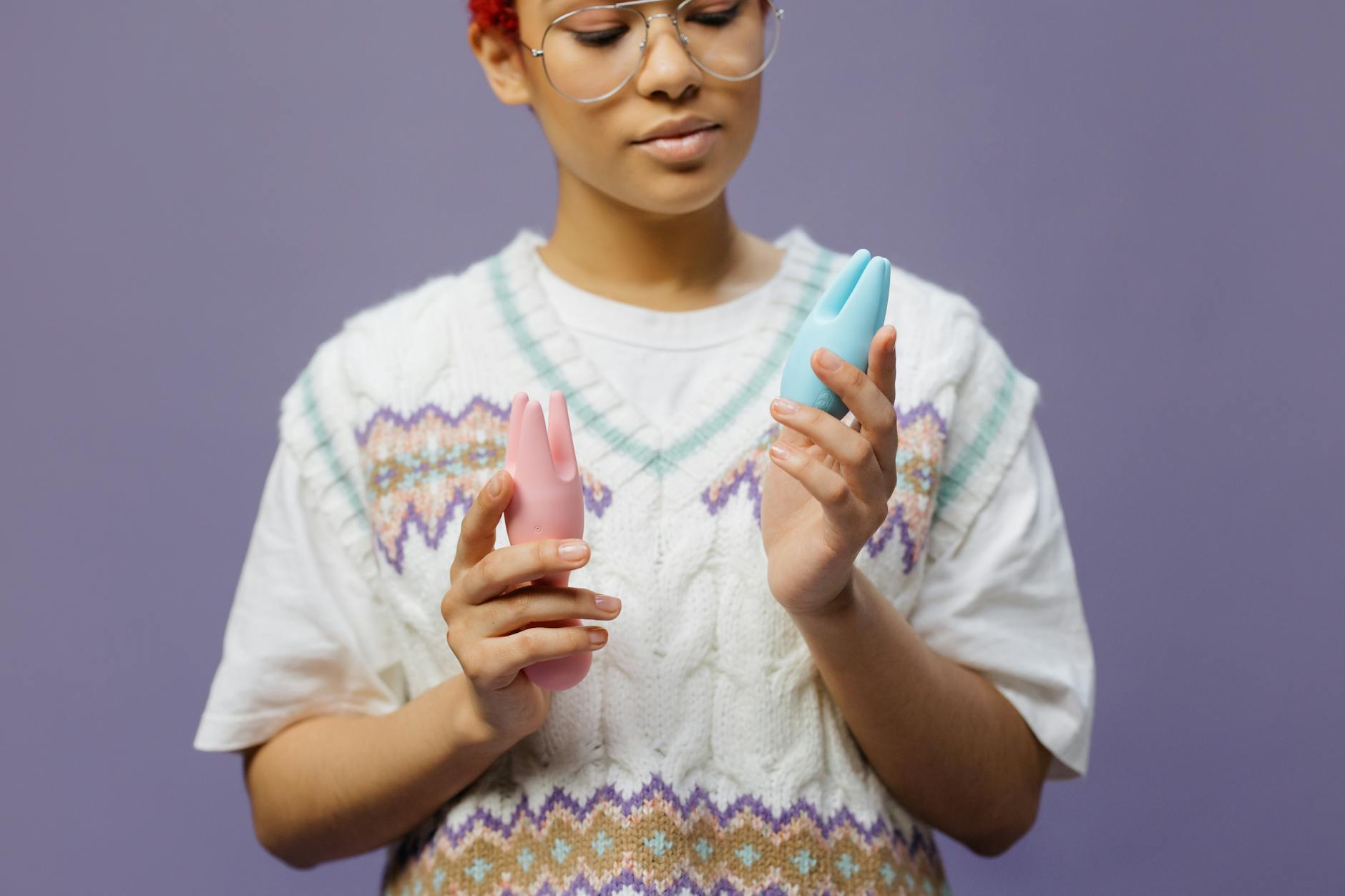
Your lemon vibrator still works. Your body's just speaking a different language now.
Hormonal changes aren't a pleasure off-switch. They're a volume dial that's been turned sideways. If you've noticed that your lemon vibrator, air suction clitoral vibrator, or any lemon sexual toy doesn't feel quite the same after a hormonal shift, you're not imagining it. And you're definitely not broken. Here's what's actually happening, and what you can do about it.
What hormones are really doing to your sensation
Let's start with the physical layer. Estrogen affects tissue thickness around the vulva and clitoris. When estrogen levels shift, that tissue gets thinner and more delicate. Your lemon clitoral vibrator might feel intense in places where it felt perfect three months ago. That's not a malfunction in the toy. It's your body adapting.
Progesterone influences how blood flows to the pelvic region, which changes how quickly arousal builds. If you're used to feeling immediate response to your lemon vibrator at pattern three, you might now need five to ten minutes of buildup plus pattern one or two to hit that same sensation. This isn't slower pleasure. It's a different pathway to the same destination.
The clitoral nerve itself doesn't change. Neither does your brain's capacity for orgasm. What changes is the scaffolding around the nerve. Think of it like the difference between touching your arm through cotton versus silk. The touch sensation is still traveling the same neural highway, but the material between your skin and the stimulation changes the experience.
Why your favorite lemon vibrator might suddenly feel too intense
Many people assume that if a lemon sucker or air suction vibrator felt amazing before, it will feel the same intensity afterward. That's like assuming your favorite coffee shop will taste the same when your taste buds shift. Not everything needs to change, but something has.
Thinner tissue around the clitoris means the vibration penetrates faster and feels sharper. Your lemon vibrator isn't vibrating any differently. Your body's ability to disperse that vibration has changed.
The solution isn't to stop using your lemon clitoral vibrator. It's to reframe how you're using it. Start at lower intensity settings. The Lem and other lemon vibrators come with multiple patterns precisely for this reason. Patterns one through three exist for bodies like yours. There's no prize for jumping to pattern five.
Also consider this: air suction toys like the lemon vibrator actually have an advantage here. Instead of direct vibration, they work with suction and release, which creates a wave-like sensation rather than a constant buzz. That can feel significantly more comfortable on delicate tissue while still delivering intense stimulation.
Lubrication becomes non-negotiable
Here's the thing nobody wants to hear but everyone needs to know: lubrication shifts with hormones. Your body might produce less natural lubrication, or that lubrication might have a different pH balance. This doesn't mean you're less aroused. It means your body is speaking a different chemical language.
Water-based lubricant stops being optional. It becomes your lemon vibrator's best friend. Apply it generously before using any clitoral vibrator, even if you think you don't need it. Your lemon adult toy will glide more smoothly, the sensation will feel less sharp, and you'll have better contact overall.
Not all lubes are the same. Silicone-based lubes feel richer and last longer, but they can damage silicone toys like most lemon sexual toys. Stick with water-based. Look for pH-balanced formulas if you're sensitive. Your clitoris deserves lubricant that matches its chemistry.
Warm-up time is no longer a suggestion
Before hormonal changes, maybe you needed two minutes with your lemon vibrator to feel ready. Now you might need twelve. This isn't a loss. It's information.
Arrangement matters here too. Manual clitoral touch, a partner's attention, or a slower toy setting for five to ten minutes before moving to your lemon clitoral vibrator sets your nervous system up for success. Think of it as priming. Your body needs to know what's coming.
The air suction pattern of a lemon vibrator actually works beautifully for warm-up because it creates a gentler, building sensation. You can start with your lemon sucker at low suction, let your body gradually recognize the sensation, then build from there.
Pelvic floor strength and sensitivity are connected now
Hormonal changes often mean the pelvic floor loses some elasticity and support. This is partly why sensation can feel different. Your pelvic floor muscles are literally holding less tension.
That's not all bad news. A looser pelvic floor can mean orgasms that feel more diffuse and full-body rather than concentrated in one spot. Some people describe this as more satisfying. Others prefer the more focused sensation they had before.
You can gently work with your pelvic floor through relaxation practices. Actually, relaxation matters more than the old "kegels, kegels, kegels" advice. Before using your lemon vibrator, spend two minutes consciously releasing any tension in your pelvic floor. Breathe. Let your body soften. This preps the muscles for sensation rather than gripping against it.
Your orgasm might feel like it's building differently
Many people notice that orgasms after hormonal changes feel like a plateau instead of a peak. The sensation builds and builds but doesn't crest the same way. Or it crests differently, holding at a sustained high instead of a sharp spike.
This isn't failure. This is your body's new orgasmic signature. Lemon vibrators and other clitoral vibrators still work for this, but you might need to stay at a sensation longer before the release happens. Don't rush. The peak is still coming. It's just taking a different shape.
Some people find that changing their mental focus helps here. Instead of concentrating on the physical sensation, trying breathing or mental imagery can let the orgasm build more naturally. Your lemon sexual toy is just a tool. Your brain is doing the heavy lifting.
The mental piece matters as much as the physical one
Hormonal changes often happen alongside other life shifts. Kids leaving home. Career changes. Relationship renegotiations. Grief. When you're carrying emotional weight, your body's pleasure response gets a little harder to access.
If your lemon vibrator isn't hitting the way it used to, before you assume it's purely physical, check in with yourself about what else is going on. Is your mind actually present when you're using it, or are you running through a mental to-do list? That's not a character flaw. That's information.
Sometimes the best thing for your lemon clitoral vibrator routine is actually better boundaries around distractions. Your phone in another room. A locked door. Ten minutes where nothing else matters. Your nervous system needs permission to shift into pleasure mode.
When to see someone about it
If pain shows up during or after using your lemon vibrator, that's a signal to check in with a healthcare provider. Pain is different from sensation change. It means something needs adjusting, either medically or in how you're using your toy.
Similarly, if desire has tanked completely and isn't coming back with better foreplay and lube, that's worth discussing with a doctor who understands hormonal health. Certain hormone treatments can help. Not everyone needs them, but the conversation is worth having.
Your lemon vibrator is still your tool
Whatever changed in your body, your lemon clitoral vibrator still works. You might be using it differently now, at different intensities, with more preparation, with different expectations about how orgasm feels. That's not a step backward. That's a tool still doing its job while you're evolving.
Hello Nancy designs tools for pleasure that works across different bodies and different seasons of life. Your lemon sexual toy isn't suddenly broken because your body shifted. It's just waiting for you to meet it where you are now.
People also ask
Why does my lemon vibrator feel sharper after hormonal changes?
Thinner tissue around the clitoris means vibration penetrates faster and meets less cushioning. Your lemon vibrator isn't vibrating harder. Your body's tissue density has changed, so the same vibration feels more intense. Start with lower intensity settings and build up from there.
Should I use a different type of vibrator after hormonal changes?
Not necessarily. An air suction lemon vibrator like the Lem might feel more comfortable than a traditional vibrator on delicate tissue because suction creates a wave-like sensation instead of direct buzzing. But if you like your current lemon sexual toy, you can keep using it. Just adjust settings and add lubrication.
How much lubrication should I use with my lemon clitoral vibrator?
Use more than you think you need, then use a little more. A generous amount of water-based lube helps your lemon vibrator glide smoothly and reduces sharp sensations on delicate tissue. Reapply if things get too dry during your session.
Can hormonal changes permanently change how orgasms feel?
Yes, and that's usually fine. Your orgasm might feel different: more sustained, more diffuse, or with a different intensity pattern. That's not worse. It's just different. Your body is adapting, and your pleasure pattern is shifting with it.
Is it normal for arousal to take longer after hormonal changes?
Completely normal. Blood flow patterns shift, so arousal takes longer to build. This isn't a sign that something's wrong. It's information that you need more warm-up time. Budget fifteen to twenty minutes for buildup before using your lemon vibrator at full intensity.
What if my lemon vibrator doesn't feel good anymore?
First, make sure you're using water-based lube, starting at low intensity, and giving yourself adequate warm-up time. If it still doesn't work for you after adjusting those variables, talk to a healthcare provider about what's happening with your body. Sometimes hormonal support or pelvic floor work can help. Sometimes you might genuinely prefer a different type of stimulation now, and that's okay too.