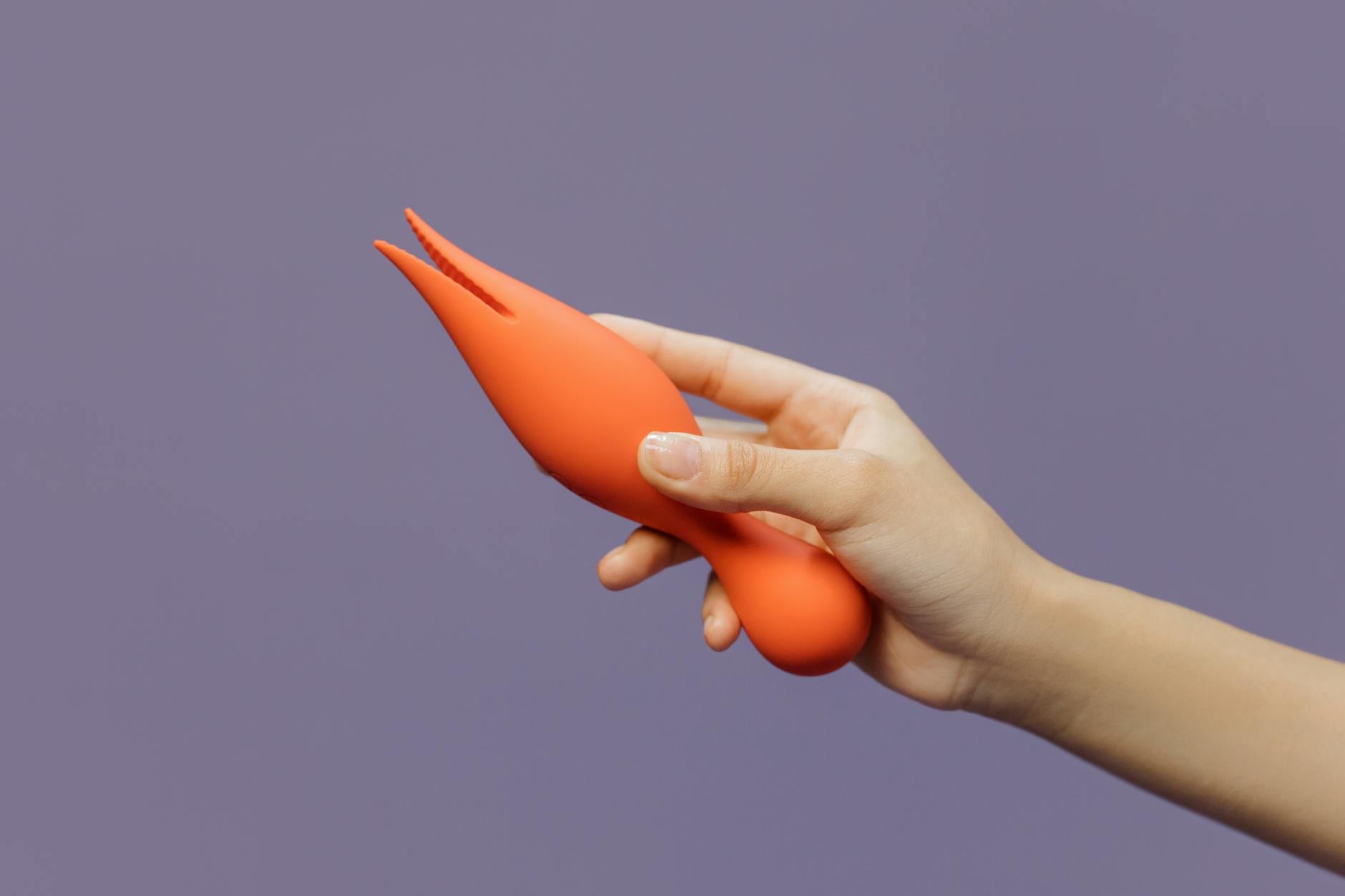
Let's talk about what you're actually buying
If you've been browsing lemon clitoral vibrators and felt confused by terms like "air-suction" or "pulsing waves," you're not alone. The difference between an air-suction lemon vibrator and a traditional vibrating toy isn't just marketing speak. It's a genuinely different physical experience, and which one works better for you depends on your body, your sensitivity, and what kind of orgasm you're actually after.
Let me break down the real distinction.
How traditional vibration actually works
A buzz vibrator does what the name suggests. A motor inside oscillates back and forth at a set frequency, usually between 50 and 100 times per second. This sends vibrations directly into the tissue you're holding it against. It's consistent, predictable, and for decades it was the only option on the market.
The sensation is direct stimulation. Your clitoris absorbs the vibration energy. Many people experience this as an intense, focused feeling, sometimes described as buzzy or electrical. If you've ever used a traditional vibrator, you know the feeling. Your nerve endings respond to the frequency, and if that frequency matches your body's preference, you get strong, quick arousal.
For some people, this is perfect. Straightforward, reliable, done.
For others, traditional vibration can become overwhelming, numbing, or just not quite right, especially if you have sensitive skin or if you're exploring what actually gets you there. This is where the other technology enters the conversation.
What air-suction lemon vibrators actually do
Air-suction technology works on a different principle entirely. Instead of vibrating side to side, it creates gentle pulses of pressure and release, mimicking the sensation of oral sex. It doesn't buzz. It gently draws the clitoral tissue upward and then releases, then repeats, building a rhythmic wave of stimulation.
The lemon vibrator uses this technology brilliantly because the shape concentrates that suction sensation in a precise, smaller area. You're not getting scattered vibration across your whole vulva. You're getting focused, rhythmic pressure waves.
What does this feel like in practice? Most people describe it as deeper, more rounded, less "tingly" than traditional vibration. The sensation builds differently. Instead of an immediate electrical buzz, you get a slower, more sensual wave of pressure. It's slower to start but often easier to sustain for longer stretches.
The nerve science you actually need to know
Your clitoris has about 8,000 nerve endings concentrated in a space the size of a pea. Those nerve endings respond to different types of stimulation. Some nerves light up with vibration frequencies. Others respond better to pressure and suction.
Traditional vibrators tend to stimulate surface-level nerve endings. They're fast and obvious. Air-suction stimulation reaches deeper tissue because it's creating sustained pressure rather than rapid oscillation. Your body registers this as a completely separate stimulus.
This matters because some people have more sensitive surface nerve endings and fewer deep-tissue receptors. Others are the opposite. Neither is better. They're just different, which is why "the best vibrator" is actually "the one that matches your specific nerve response."
For people who find traditional vibrators too intense too quickly, or who go numb after extended use, an air-suction lemon vibrator often feels like a revelation. It's a different conversation with your body entirely.
When traditional vibration actually wins
Let's be honest about the strengths here. Traditional vibrators are usually faster to orgasm. If you know exactly what frequency gets you there, and you want quick results, a steady buzz vibrator is efficient. No ramp-up time, no learning curve.
Traditional vibrators are also usually more affordable. Simple motor, straightforward design, mass production. An air-suction lemon vibrator requires more sophisticated engineering, so the price point is higher.
For some partners, the intensity of traditional vibration is exactly what they need. Not everyone wants a slow build. Some people want immediate, overwhelming sensation. That's valid. And a high-intensity buzz vibrator delivers that without hesitation.
Also, if you're new to vibrators altogether, a traditional one can feel less intimidating. There's less to figure out. You turn it on, you use it. Done.
When air-suction actually changes the game
If you're someone whose body takes time to warm up, air-suction wins. The gentler initial sensation, the slower build, the wave-like rhythm instead of constant oscillation, all of this creates space for arousal to develop naturally rather than spike suddenly.
If you've noticed that traditional vibrators numb you out after 10 or 15 minutes, air-suction might be your answer. Because the stimulation is different, your nerve endings don't adapt and desensitize the same way. Many of my clients report that they can sustain pleasure longer with air-suction technology.
If you have a sensitive clitoris or reactive skin, air-suction lemon vibrators often feel more comfortable because there's no direct friction, just gentle rhythmic pressure. This is especially true for people managing genitourinary syndrome or those recovering from any kind of pelvic sensitivity.
Air-suction also shines for people exploring partnered pleasure. Because the stimulation is less intense, it's easier to layer it with other sensations. A partner can be involved in other ways while you're using a lemon vibrator without the sensation becoming overwhelming.
The practical difference in real pleasure
Here's what I hear most often from clients: traditional vibrators feel like a sprint to the finish line. Air-suction feels like a journey. The orgasm that comes from air-suction stimulation is often described as deeper, more full-body, arriving with less urgency but more intensity when it lands.
With traditional vibration, you might experience multiple quick orgasms in succession. With air-suction, you might have fewer orgasms but they tend to be longer, more sustained, sometimes with full-body involvement.
Neither is objectively better. But if you've been chasing the traditional-vibrator experience and it's never quite landed right, this might explain why. Your body might be wired to respond better to pressure and suction than to pure oscillation. There's nothing wrong with your body. You just needed the right tool.
How to actually figure out which one is for you
If you've only ever used traditional vibrators, you genuinely don't know yet. You can't know. You need to try the alternative. If you have access to both, spend real time with each one. Not a rushed test. Actual sessions, multiple times, different times of day, different states of arousal.
Pay attention to how arousal builds. Does it come on suddenly or gradually? Does the sensation feel comfortable for sustained time, or does it become irritating? Does the orgasm feel like a sharp peak or a wave? There are no wrong answers. But your answers will tell you which technology suits your body.
If you're starting fresh and choosing between the two, consider your sensitivities and your timeline. If you know you like slow builds and have time, lean toward air-suction. If you want fast results and don't mind intensity, traditional vibration is reliable.
The combination approach nobody talks about
Here's a secret: some people use both. A traditional vibrator for quickies, an air-suction lemon vibrator for longer sessions. A buzz vibrator when you're in a hurry, suction stimulation when you have time to explore. They're not competing. They're tools for different moods and different bodies on different days.
Your pleasure doesn't need to be consistent. It doesn't need to be one-size-fits-all. The more you understand about how your body actually responds to different types of stimulation, the more freedom you have to choose what serves you on any given day.
FAQ: Air-suction vs traditional vibration
Is air-suction better for sensitive clitorises?
Often yes, but not always. Air-suction is gentler in the way it stimulates, which many people with sensitivity prefer. But sensitivity is individual. Some highly sensitive people find that even gentle suction is too much and actually prefer moderate traditional vibration. The only way to know is to try both and pay attention to what feels good versus what feels overstimulating.
Can you get numb using an air-suction vibrator?
It's less common than with traditional vibrators, but yes, desensitization is possible with any repeated high-intensity stimulation. The difference is that air-suction users typically report needing longer sessions before numbness sets in, if it happens at all. Taking breaks between sessions helps prevent desensitization regardless of which technology you're using.
Is air-suction more expensive?
Generally yes. Air-suction requires more sophisticated motor technology and engineering, so the price point is usually higher. That said, quality matters in both categories. A cheap traditional vibrator and a quality air-suction device aren't really comparable. You're comparing build quality and motor sophistication, not just the technology.
Do partners prefer one type over the other?
For partnered pleasure, air-suction lemon vibrators often work better because the lower intensity makes it easier to incorporate into shared touch without overwhelming either person. But this is completely individual. Some partners love the intensity of traditional vibration. Communication is always the answer.
How long does it take to orgasm with air-suction versus traditional vibration?
Traditional vibrators are typically faster. You might orgasm in 5-10 minutes with strong buzz stimulation. Air-suction usually takes longer but builds to something that feels more substantial. Some people describe it as a trade-off: faster with vibration, deeper with suction. Again, it depends entirely on your body and your nervous system.
Can you use both at the same time?
Absolutely, though it depends on the size and shape of your toys. Layering an air-suction lemon vibrator with a partner's touch, or with another vibrating toy, can create interesting sensations. Just start at low intensity and work up slowly so you don't overwhelm your nervous system.
The real takeaway
Neither technology is universally better. Your body isn't waiting to be fixed. It's waiting to be understood. The difference between air-suction and traditional vibration is real, measurable, and genuinely changes the experience.
If you've been using traditional vibrators and they've never quite worked the way other people describe, you're not broken. You might just be someone whose nervous system responds better to suction and pressure than to rapid oscillation. That's valuable information.
The more tools you have, the more you understand about what actually works for you, the more freedom you have. Your pleasure matters enough to explore what feels truly good, not just what's easiest or most available.
Want to explore your preferences more deeply? We're here to help you figure out what actually works for your body. Get in touch.
Sources and further reading
- International Society for Sexual Medicine. (2020). "Physiology of Female Sexual Response." Journal of Sexual Medicine, 17(3), 387-399.
- Meston, C. M., & Frohlich, P. F. (2000). "The neurobiology of sexual function." Archives of General Psychiatry, 57(11), 1012-1030.
- Komisaruk, B. R., Beyer-Flores, C., & Whipple, B. (2006). The Science of Orgasm. Johns Hopkins University Press.