Let's be honest about the resistance
You want to bring a lemon vibrator into your partnered sex life, and you're nervous about it. Not because there's anything wrong with vibrators. Not because your partner is prudish. You're nervous because our culture still loads them up with subtext: threat, inadequacy, a stand-in for what a partner should be able to provide.
Here's the thing. None of that is real. But your hesitation to bring it up? That's completely real, and I want to help you move through it.
Why the resistance is so strong (and why it matters)
A vibrator in partnered sex sits at the intersection of three loaded territories: pleasure, performance, and what counts as "real" intimacy. For the partner on the receiving end, there's often a fear buried underneath. Not that vibrators work (everyone knows they do). The fear is: does this mean I'm not enough?
For the partner suggesting it, there's often guilt layered on top of desire. You're not supposed to want something more. You're supposed to be satisfied with what you have. Bringing toys into the bedroom can feel like saying "this isn't working."
It's not. What it actually says is: "I want us both to feel as good as possible." That's not critique. That's collaboration.
The mental setup before the conversation
Before you open your mouth, get clear on your own why. Are you suggesting a lemon clitoral vibrator because you genuinely want more intense sensation? Because you've been struggling to orgasm with your partner present and you're hoping this helps? Because you read that it could deepen partnered pleasure for both of you?
The reason matters, not because one is right and the others are wrong, but because it shapes how you frame the conversation. If you're trying to solve a problem (orgasm difficulty, pain, disconnection), that's very different from wanting to add a tool that amplifies what's already working.
Spend a few days sitting with your actual motivation. Write it down if that helps. The clearer you are internally, the less defensive you'll sound when you bring it up.
Timing: when to have the conversation
Do not bring this up during sex. Do not bring it up right after sex when everyone is flooded with oxytocin and vulnerable. Do not spring it on your partner by casually mentioning it in front of other people.
Have this conversation when you're both clothed, rested, and not in crisis mode about anything else. A walk works. A quiet evening at home works. In the car on the way somewhere, oddly enough, often works because you're both facing forward and the eye contact is lower.
Avoid times when either of you is stressed, tired, or emotionally activated about something unrelated. Your partner's nervous system will be already revved up, and they'll have less bandwidth for processing something new.
What actually works to say
I'm going to give you three opening lines. Pick the one that sounds closest to how you actually talk.
Option 1 (Direct and straightforward). "I've been thinking about trying a vibrator together. Not because anything is wrong, but because I read that adding one can feel really good for both of us. I wanted to see if you'd be open to exploring that."
Option 2 (Softening with a laugh). "So I've been reading a lot of stuff about lemon vibrators, and apparently people actually find them way less intimidating than they think. Would you ever be curious to try one together? No pressure at all if not."
Option 3 (Anchoring in desire). "I've been fantasizing about using a vibrator during sex with you. I think it would feel really good, and I'd love to try it. What do you think?"
What all three have in common: they're honest, they're not apologetic, and they invite rather than demand.
What they don't do: they don't position the vibrator as a solution to a problem with your partner. They don't apologize for the desire itself. They don't make it conditional ("if you don't mind").

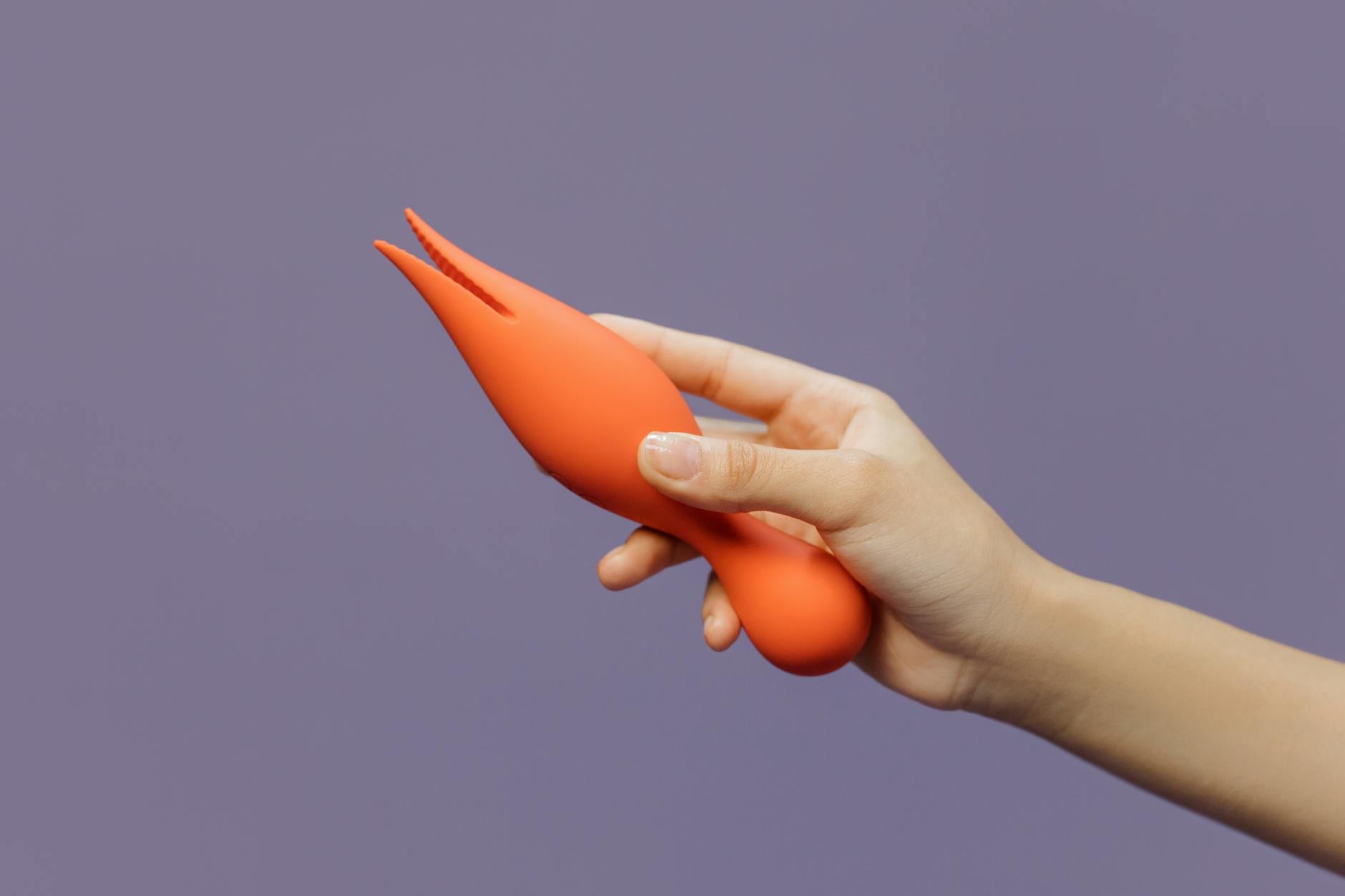
Photo by Madison Inouye on Pexels
How to handle resistance (because it might come)
If your partner says no, that's information. It's not a permanent no. It's a right-now no, often rooted in something specific: discomfort with the idea, insecurity, worry that you're unhappy, religious beliefs, past experiences, simple unfamiliarity.
Your job in that moment is not to convince them. Your job is to listen. Ask: "What are you worried about?" Let them say the thing. Don't defend. Don't minimize. Don't try to logic them out of their feelings.
If the resistance is rooted in insecurity, you might say: "It's not about whether you're enough. It's that I want to try something new together." If it's unfamiliarity, you might offer: "We could just look at one together first. No pressure to use it soon."
If it's a hard no, respect it. Pushing someone past their actual boundary is how you build resentment, not arousal.
The first time: expectations matter
When you do bring a lemon clitoral vibrator into your shared sex life, don't make it a Big Moment. Don't put pressure on it to transform everything. The first time you use a vibrator together should feel exploratory, not like a performance.
Talk through the logistics beforehand. Which partner will hold it? Will it stay internal stimulation only, or will you use it on the clitoris? (If you're working with a lemon vibrator designed for external stimulation, this is straightforward.) How will you communicate what feels good? What if someone wants to stop?
Start with a lower intensity setting if your vibrator has them. (The Lem, for instance, has multiple patterns.) Take time to actually enjoy the sensation instead of rushing toward an orgasm. Some of the best partnered vibrator sex happens when you're both just exploring what feels good without a goal state.
What changes in the dynamic
Bringing in a vibrator does change something. It usually makes the receiving partner feel more pleasure, which often feeds back into the giver feeling more confident and connected. It takes pressure off the giver's hand or body to provide all stimulation, which is honestly a relief for most people.
For partners with vulvas, external clitoral vibration often makes orgasms easier and sometimes more intense. For partners with penises, many report that having a vibrator involved creates a different dynamic that feels fresh and energizing.
The key piece: if your partner starts to come more easily, that's not a threat. That's the point. Your partner feeling genuine pleasure doesn't diminish you. It includes you.
Ongoing communication
After you've used the vibrator a few times, check in. Not interrogate. Just: "How are you feeling about using the vibrator? Anything you want to adjust?" This keeps it from becoming a weird unspoken thing. It also gives both of you permission to say if something isn't working.
Some couples use a vibrator every single time. Some use it once a month. Some try it a few times and then put it away. All of those are fine. The point is that you're choosing together, adjusting together, and staying curious together.
FAQ
Will using a vibrator during partner sex make my partner feel inadequate?
Only if you treat it like a replacement rather than a tool. If you frame it as "I want to feel more" instead of "you're not making me feel enough," the conversation stays collaborative. Many partners actually feel more confident knowing their partner is having intense pleasure, not less.
What if my partner wants to use the vibrator but I feel insecure about it?
This is real. If your partner wants to use a vibrator and you're anxious about what that means about you, sit with that feeling first. Ask yourself: am I afraid they don't want me anymore? Am I worried they'll prefer the vibrator? Am I uncomfortable with sexuality in general? Naming the real fear makes it smaller. Then talk to your partner about what you're actually nervous about.
Can you use a lemon vibrator during penetrative sex?
Yes, though it depends on the vibrator design and the position. Many external clitoral vibrators like the Lem work beautifully during penetration. You can hold it against the clitoris while penetration happens, which often creates incredible sensation for the receiving partner. Start slowly and communicate about what feels good.
How do you clean a vibrator between partner sex and solo use?
Wash with warm water and mild soap, then pat dry with a clean cloth. If you're sharing a vibrator, this is actually good practice anyway. Some people keep separate toys for solo and partnered use, which is also totally valid.
What if we try it once and neither of us likes it?
Then you've learned something. You tried, it didn't land, and now you know. You can put the vibrator away and never use it, or you can try a different kind. Not every tool works for every body and every partnership. The win is that you tried something together.
Is it weird to use a vibrator every time we have sex?
Not at all. Some couples do, some don't. There's no normal. If both of you want it and it feels good, that's your normal. The only time it becomes a problem is if one person feels pressured or if you're using it to avoid other kinds of connection. As long as you're still touching, communicating, and present with each other, you're good.
The real truth
Bringing a vibrator into partnered sex isn't a sign that something is broken. It's a sign that you're both interested in feeling as good as possible. That you're willing to be a little vulnerable, try something new, and prioritize pleasure as something worth exploring together.
That's actually the foundation of great long-term sex. Not passion alone. Not novelty alone. Actual teamwork around what feels good, said out loud, adjusted when needed, and approached with genuine curiosity about your partner's experience.
If you can have this conversation and explore together, you can probably handle a lot of other things too.