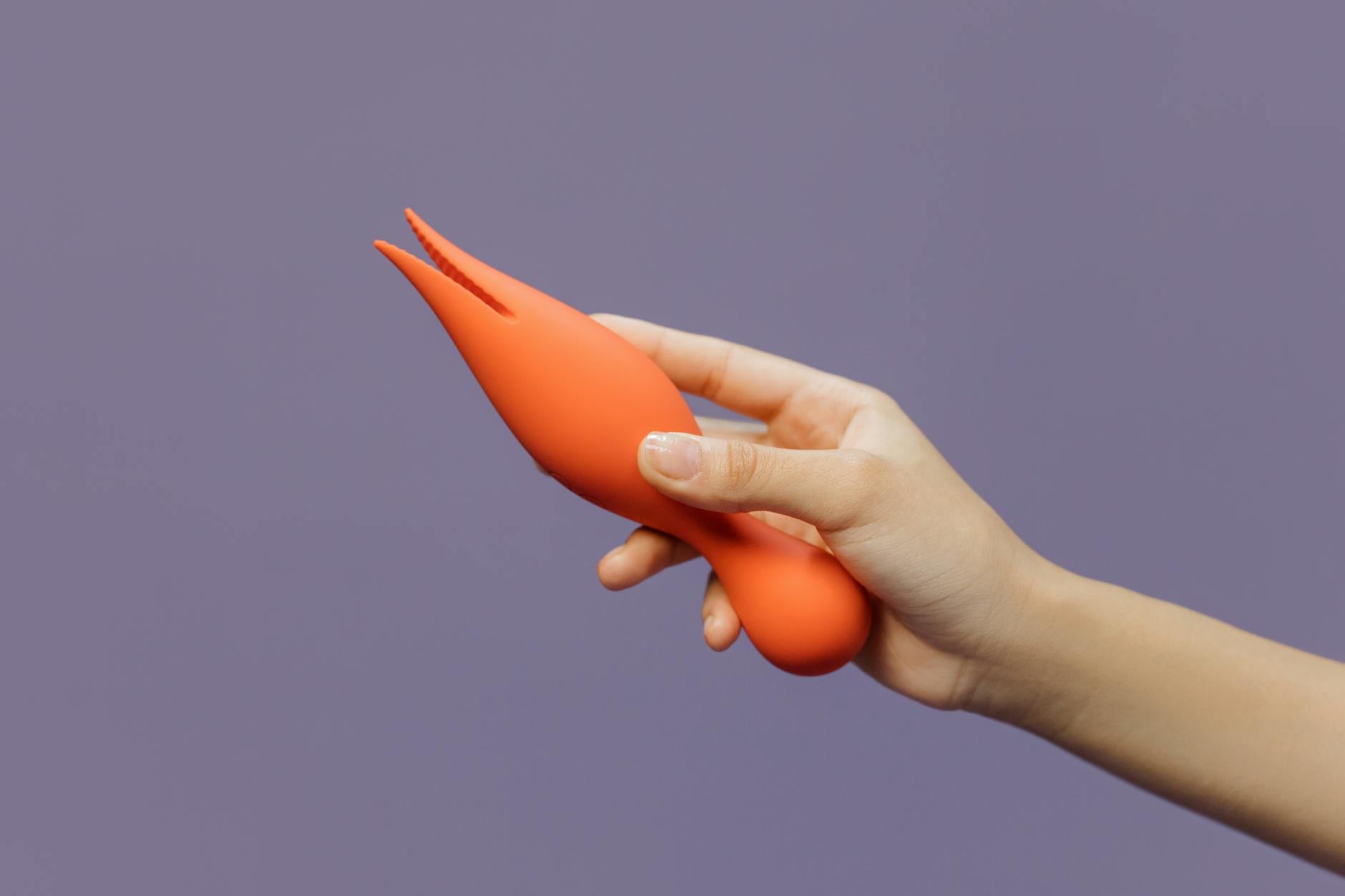
Here's what nobody tells you about back-to-back orgasms with a lemon vibrator
You can absolutely have multiple orgasms in one session. The myth that you need to wait hours between clitoral orgasms is exactly that: a myth. Your body doesn't work that way. But the quality of those orgasms, the sensation, and how they stack depends on a few things that lemon clitoral vibrators handle differently than traditional vibration.
Let's talk about what actually happens in your nervous system, why air-suction changes the game, and how to know what recovery looks like for you personally.
What refractory period actually means
Refractory period is the window after orgasm when your body is harder to arouse again. For people with penises, this is hard-wired and measured in minutes to hours. For people with vulvas and clitorises, it's wildly variable and often nearly nonexistent.
Here's the nuance: you can have another orgasm in seconds. Your clitoris doesn't need recovery time the way other tissues do. But the quality of sensation often changes if you go too fast. This is where lemon vibrators shine.
Traditional vibrators work through sustained vibration against sensitive tissue. After an orgasm, that same frequency can feel overstimulating, almost numb. Your nervous system is flooded with sensation and needs a moment to recalibrate. Air-suction devices like lemon vibrators don't work the same way. They use rhythmic pulsing rather than constant vibration, which means you can often move into a second or third orgasm with fresh intensity instead of diminishing returns.
Why the lemon vibrator changes the equation
Lemon vibrators use gentle suction and release patterns rather than direct vibration. This matters because your clitoris has two main types of nerve endings: those that respond to steady pressure and those that respond to rhythmic pulsing. Traditional vibrators max out the first type quickly. With a lemon sucker, you're engaging both in a way that doesn't burn out one pathway.
Clinically, this translates to: people using air-suction devices report being able to have multiple orgasms with consistent intensity, whereas with traditional vibration, the second or third orgasm often feels blunted or requires different positioning or intensity to achieve.
That's not your body failing. It's physiology. And lemon clitoral vibrators work with that physiology instead of against it.
The actual timeline: seconds, minutes, or longer
Three scenarios happen in my work with clients.
Seconds. Some people, especially those using air-suction devices, can go from one orgasm directly into stimulation for another almost immediately. The break is more about breath and attention than tissue recovery. If this is you, that's totally normal. Your nervous system resets fast.
Two to five minutes. Most people fall here. You want a genuine break: breathing, maybe a sip of water, a shift in position or intensity. Your clitoris isn't fatigued, but your attention is. This is where the quality difference matters most. After two minutes of break, your second orgasm with a lemon vibrator often feels as sharp and distinct as the first one.
Longer breaks. Some people find that back-to-back sessions within an hour feel okay, but after that first couple of orgasms, they want a genuine reset: a different activity, a partner interaction, or even stopping and starting fresh the next day. There's no "should" here. Your pleasure isn't a quota.
What actually affects your recovery window
Four things matter more than anything else.
Arousal baseline. If you're deeply aroused and focused, you'll recover faster. If you're checking the time or thinking about work, you'll want more space between. This is why the lemon vibrator's quiet design helps. Less sensory distraction means you stay in the zone longer.
Intensity of the orgasm. A gentle, spreading orgasm? You might be ready again in 20 seconds. A deep, full-body, everything-clenches kind of orgasm? You'll probably want two to five minutes. Neither is better. Both are data about what just happened.
Pelvic floor engagement. If your pelvic floor is tight during orgasm (which is normal), you might feel more fatigue afterward. How to use a lemon vibrator after pelvic floor relaxation training covers this in detail, but the short version: people who practice pelvic floor relaxation often notice they can have multiple orgasms more comfortably.
What you've had or ingested. Caffeine, alcohol, and certain medications all shift your nervous system state, which affects how quickly you recover. Alcohol especially slows sensation and resets. Caffeine can make you hypersensitive. Neither makes you broken. It just changes the timeline.
How to know when you're actually done (vs. when you're just numb)
This matters because numbness isn't the same as satisfaction.
Numbness is a sign your nerve endings are temporarily overwhelmed. You can keep going, but sensation becomes muted and orgasm becomes harder to achieve. If this is happening, stop. Take 10 minutes. Get water. Change your environment or toy. Your clitoris will reset.
Real satisfaction is different. You feel genuinely satisfied. Your body is relaxed. You're not chasing anything anymore. That's when you're done, and it has nothing to do with how many orgasms you've had.
The tricky part: sometimes numbness feels like you need more stimulation, so you keep going. But what you actually need is a break. Why your lemon vibrator orgasm feels like a plateau digs into this, but the test is simple. Stop for five minutes. If sensation bounces back and feels fresh, you were numb. If you still don't want to continue, you were actually satisfied.
Multi-session play: spacing across a day
Now if you want to have a session in the morning and another in the evening, that's entirely safe. There's no clinical limit on how many times a day you can use a lemon vibrator or any clitoral vibrator.
What matters is that each session feels good. If you're chasing sensation or forcing something, stop. If you're genuinely aroused and it feels natural, go for it. Your body knows the difference.
Some people find they have more capacity during certain times of their cycle, after certain medications wear off, or when they're in particular headspace with a partner. Track what feels good. Pleasure isn't one-size-fits-all.
The myth of nerve damage from frequent use
Let me be direct: you cannot desensitize your clitoris through vibrator use. That's not how nerve endings work. Overstimulation can cause temporary numbness or fatigue, but that resets within hours or days. Chronic use doesn't rewire your clitoris.
What does happen sometimes is that your brain gets used to a particular pattern or intensity. If you use the same lemon vibrator at the same setting every single day for months, your nervous system might stop registering it as novel. But that's not damage. That's adaptation. The fix is simple: change the pattern, the setting, the toy, or take a break for a week. Sensation comes roaring back.
When to actually pause between sessions
Three red flags that mean you should take a real break.
Pain. Never push through pain. Pressure or mild discomfort is different from pain. If something hurts, stop and don't return to that toy or pattern until you've figured out why.
Irritation or swelling. If your vulva or clitoris is swollen, red, or irritated, take a few hours off. This usually means you were either too intense, didn't use enough lubricant, or used a material that doesn't work for your skin. Silicone toys with water-based lube are the safest combo.
Genuine numbness that doesn't reset. If you stop for five minutes and sensation hasn't come back, you went too far. Let it rest for a couple of hours. Sensation will return fully.
FAQ
Can you use a lemon vibrator back-to-back without breaks?
Yes, but the quality usually improves with a one- to five-minute break between. With air-suction lemon clitoral vibrators specifically, you often get consistent intensity across multiple orgasms, which makes back-to-back less necessary. Listen to your body. If the second orgasm feels as good as the first, keep going. If it feels muted, take a break.
How do you know if you're having multiple orgasms or just one long one?
Multiple orgasms typically feel like distinct peaks followed by a dip, then another rise. One long orgasm is a sustained wave without a clear valley. Neither is better. Both are real. Some people with vulvas rarely have the multiple-peak pattern, and some people almost always do. It's just how your nervous system is wired.
Does using a lemon vibrator more often make you need it more?
No. What happens is your brain and body get familiar with the pattern. If you use the same setting every day, it becomes less novel. But that's not dependence. That's adaptation. Switching intensities, patterns, or taking breaks resets novelty immediately. Pleasure doesn't work like drug tolerance.
Is it safe to use a lemon vibrator multiple times a day?
Completely safe, as long as each session feels good and you're not pushing through numbness or irritation. Your clitoris doesn't have a daily limit. What matters is consent and comfort in the moment.
Why does sensation feel different the second time I use my lemon vibrator in one day?
Your nervous system is still partially activated. You might have less dramatic arousal buildup because your baseline arousal is already higher. That can make the second session feel less dramatic, but it's not worse. It's just a different flavor of pleasure. Some people prefer it.
Can you damage your clitoris by using a lemon vibrator too much?
No. Your clitoris is robust. Overuse causes temporary numbness or fatigue, not permanent damage. That resets. The only real risk is using a toy at unsafe intensity or with materials your skin reacts to. Stick with body-safe silicone, use water-based lube, and trust your body's signals.
The bottom line
Your refractory period with a lemon vibrator is probably shorter than you think, and the quality of back-to-back orgasms is often better than traditional vibrators because of how air-suction technology works. There's no hard rule for how long you should wait. One second? Five minutes? A day? All of it is normal. Pay attention to sensation quality, not quantity. If it feels good, keep going. If sensation becomes numb or pain appears, stop. Your body is exceptionally good at telling you what it needs. You just have to listen.