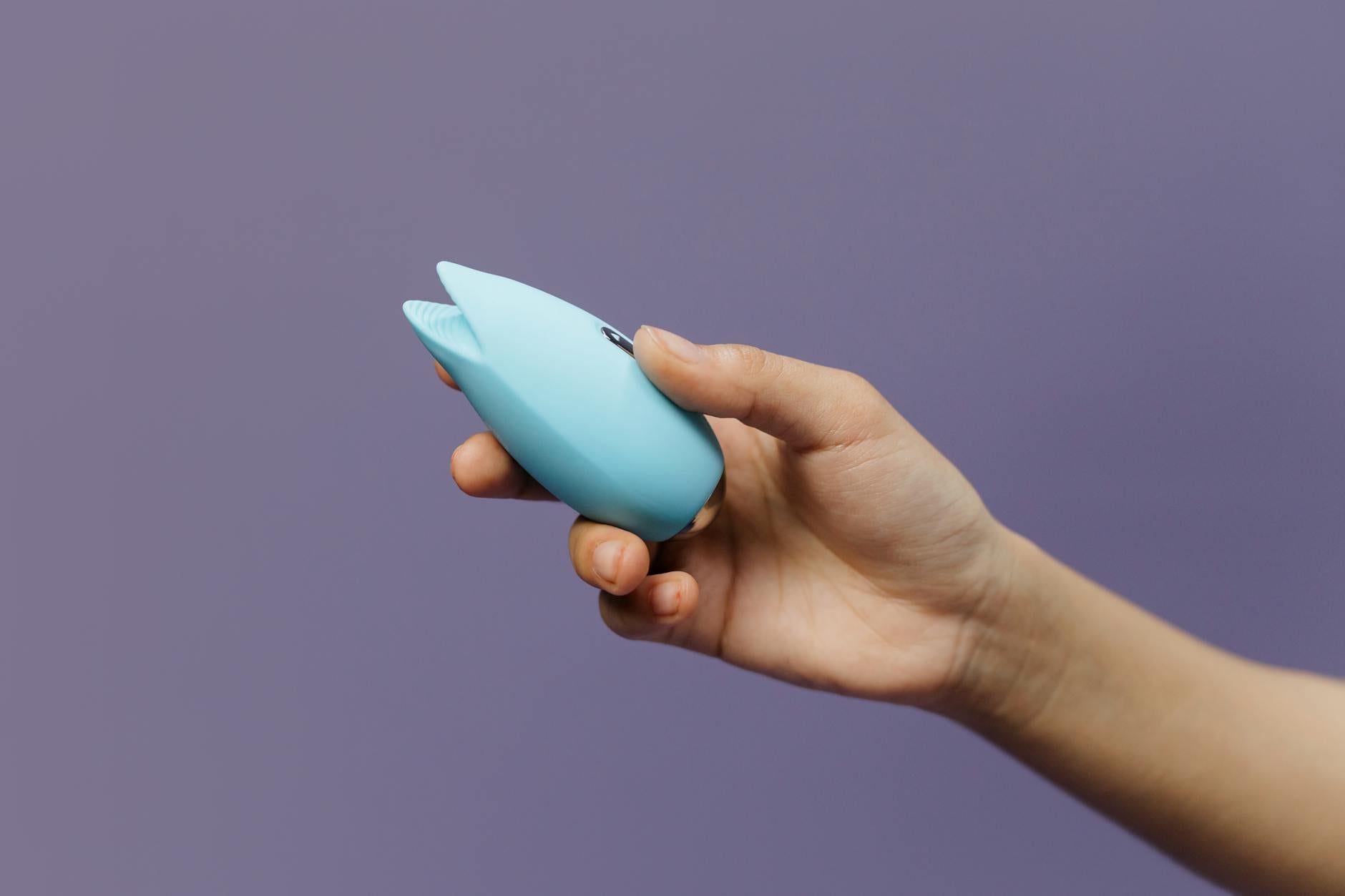
The temptation to go again (and again)
You just had an orgasm with your lemon vibrator. Your body is still humming. So why not go again? The sensation is fresh in your mind, the device is already there, and honestly, more pleasure sounds better than stopping. But here's the thing: your nervous system doesn't work like a playlist where you just hit repeat.
There's actual physiology happening between one orgasm and the next, and understanding it changes how you approach pleasure.
What happens in your body after orgasm
The moment an orgasm finishes, your nervous system shifts into what's called the resolution phase. Blood flow normalizes. Your clitoris retracts under its hood. Sensitivity peaks for a few seconds, then drops sharply. This isn't a glitch. It's protection.
During orgasm, your clitoris engorges with blood and becomes hypersensitive. That hypersensitivity is what makes the sensation so intense. But it also means the tissue is temporarily fragile. Direct stimulation immediately after can feel overwhelming, uncomfortable, or even painful if you push too hard too fast.
The refractory period is how long this lasts. For people with clitorises, refractory periods are typically shorter than for people with penises, but they're real and they matter.
The refractory period myth
You've probably heard that people with clitorises don't have a refractory period. That's half-true and half-misleading. Technically, many people with clitorises can have multiple orgasms without full physical recovery the way penis-havers need. But "can" doesn't mean "should," and the lack of a hard refractory period doesn't mean there's no recovery happening.
What's actually true: the clitoris is capable of multi-orgasmic response. The nervous system can fire again relatively quickly. The limiting factor isn't usually physical impossibility. It's comfort, sensation quality, and tissue health.
Many people find that orgasm number two is duller than orgasm number one. Orgasm number three even less intense. This isn't failure. It's your body telling you something.
Why sensation gets duller with each orgasm
Think of your clitoris like a nerve ending at maximum volume. After the first orgasm, the volume doesn't reset to zero immediately. It drops to about 60 percent. By the third or fourth orgasm, you're at 40 percent. You're still stimulating the same nerves, but they're less responsive. You need more pressure, more time, more everything to get the same sensation.
This is called accommodation. Your nervous system adapts to sustained stimulation. It's the reason you stop noticing background noise or the feel of your clothes after a few minutes. With a lemon vibrator or any clitoral vibrator, the pattern is the same.
Some people love chasing multiple orgasms anyway because the cumulative sensation is still rewarding. Others find that one really good orgasm beats three mediocre ones. Both are completely valid. The key is knowing what you're choosing when you make the choice.
The 10-to-20-minute sweet spot
If you want multiple strong orgasms in a single session, the research and real-world feedback point to a simple guideline: wait 10 to 20 minutes between orgasms. This time allows hypersensitivity to fade, allows blood flow to normalize, and gives your clitoris a chance to reset.
You don't have to time it precisely. You can use this window to switch things up. Take a break. Touch other parts of your body. Change positions. Use a different sensation or pattern on your lemon vibrator. Or just sit with your partner, breathe, and let your nervous system settle.
Wait less than 5 minutes and you're almost guaranteed to feel overstimulated and numb. Wait 30 minutes and you've essentially started over. The 10-to-20-minute window is where the magic happens.
What "overstimulation" actually feels like
This is important because overstimulation isn't always obvious. It's not just "this hurts." It can feel like numbness, a dull ache, irritation, or complete loss of sensation even though you're still using the same vibration intensity. Your clitoris literally becomes less responsive because the nerve endings are overwhelmed.
Repeat this pattern too often (say, pushing for four orgasms in a row multiple times a week without rest), and you can develop temporary desensitization. This isn't permanent, but it's annoying. It means your next solo session feels less satisfying. It means your lemon vibrator feels less effective. It means you're chasing sensation instead of enjoying it.
The fix is usually just time. A few days of not using the device, or spacing out sessions with longer gaps, and sensation returns to normal.
Partner dynamics and multiple orgasms
If you're using a lemon vibrator with a partner watching or involved, the dynamic shifts a little. The arousal from external attention can sometimes accelerate recovery. Some people find that a partner's touch or presence helps them orgasm again more quickly because the psychological component is doing half the work.
That said, the physical recovery is still happening. Just because you can orgasm again in 5 minutes doesn't mean your clitoris has fully recovered. If pleasure intensity matters more to you than orgasm count, the 10-to-20-minute guideline still holds.
Communicating this with a partner helps. "I want to give my body time to reset so the next one feels as good as the first" is a completely reasonable thing to say. Most partners appreciate the honesty.
Age, hormones, and recovery time
Refractory periods can change across your lifespan. Younger people sometimes recover faster. Older people sometimes take longer, though this varies wildly. Hormonal fluctuations matter too. You might notice faster recovery during certain parts of your cycle. You might find that after 40, you prefer quality over quantity and don't feel the pull to go multiple rounds.
If you're exploring lemon vibrators or other clitoral vibrators, one of the beautiful things is that you get to experiment and learn what your body actually wants, not what you think it's supposed to want. Some people love multiple orgasms. Some people are one-and-done. Both bodies are working correctly.
Building a rhythm that works
Here's a practical framework: if you want multiple orgasms, plan for them. Don't assume your body will just deliver. Set up your session with the time in mind. Use the 10-to-20-minute window for foreplay with a partner, solo exploration of other sensations, or just stillness. Maybe your first orgasm is with your lemon vibrator on pattern 5, and your second is on pattern 2 or with a different toy entirely.
Variety actually helps. Changing the sensation between orgasms can make your clitoris feel more responsive because you're not asking the same nerve endings to fire the exact same way twice. It's like switching muscles during a workout instead of doing the same exercise repeatedly.
If you're new to lemon vibrators, start with one really intentional orgasm. Learn how your body responds. Notice what sensation feels best, what intensity works, what pattern keeps your attention. Then, if you want to experiment with multiples, you'll have that baseline.
The case for slowing down
Honestly, the culture around sex (and around pleasure tools) often rewards quantity. More orgasms sounds better. But in my work with couples and in my own experience, one deeply felt orgasm often creates more satisfaction than three rushed ones. It creates more afterglow. It's easier on your body. It's less likely to leave you desensitized the next time.
If multiple orgasms genuinely feel good to you, go for it. But if you're pursuing them because you think you should, or because you think that's what the device is "for," pause. Your pleasure is the only metric that matters. A lemon vibrator is just a tool. The goal is sensation that feels good, for as long as you want to experience it.
People also ask
How do I know if I'm overstimulating my clitoris with a lemon vibrator?
The main signal is numbness or a dull, uncomfortable sensation even though the vibration is still running. You might also feel irritation, rawness, or a loss of pleasure even though you're using the same intensity. If you're planning multiple orgasms and the second or third one feels significantly less pleasurable or you feel sore afterward, you waited too long or pushed too hard. Pull back on intensity or extend the recovery window next time.
Can I damage my clitoris by using a lemon clitoral vibrator too much?
Not from normal use. Your clitoris is built to handle a lot of sensation. The limiting factor is comfort, not safety. Overstimulation causes temporary numbness or irritation, not lasting damage. That said, if you're experiencing pain (not just discomfort, but actual pain), that's a sign to stop, give yourself a few days off, and reassess intensity and technique. If pain persists, it's worth talking to a doctor.
Is it true that using a lemon vibrator makes it harder to orgasm with a partner?
Not inherently, but intensity can be a factor. If you're regularly using a high-intensity vibrator like a lemon clitoral vibrator and then expecting your body to respond to softer touch alone, there might be a gap. This is called the "death grip" issue, and it's real but solvable. The fix is usually just taking breaks from the vibrator or varying your usage. Your nervous system is adaptable. After a few weeks of mixing in other sensations, responsiveness typically returns.
Can I have multiple orgasms if I'm on hormonal birth control or HRT?
Hormones affect arousal, lubrication, and sensitivity, but they don't fundamentally change the refractory period. Some people on hormonal birth control find their recovery time slightly different. Some find they're more multi-orgasmic. The best approach is to tune in to your own body. If you're on HRT and exploring lemon vibrators for the first time, don't assume anything. Experiment and see what happens.
Should I use a different pattern on my lemon vibrator between orgasms?
It can help. If your clitoris is numbing to the same pattern, switching to a different rhythm or intensity can re-engage the nerve endings. Your clitoris will feel more responsive when you change the stimulus. That said, some people love sticking with one pattern because it's what got them there. There's no rule. Do what feels good.
How is recovery time different with a lemon sucker versus other clitoral vibrators?
Lemon suckers (air-pulse devices) stimulate nerves differently than traditional vibrators. Some people find they need longer recovery between orgasms because the sensation is more intense. Others find the opposite. Because suction works on a different mechanism than vibration, your nervous system might respond faster or slower. The 10-to-20-minute guideline is a starting point. Your own experience matters more.
Build the rhythm that serves you
Your body is not a machine. It doesn't have a default setting you're supposed to unlock and then exploit. The lemon vibrators from Hello Nancy are designed to feel incredible, which is why it's so tempting to go again and again. But the most sustainable pleasure comes from listening to your body, respecting its recovery time, and building sessions that feel good rather than sessions that check a box.
If you want to explore how different devices or patterns affect your recovery, check out our guide on lemon vibrator intensity levels for more detail on adjusting sensation. And if you have questions about your body's response, we're here. Reach out at /contact.