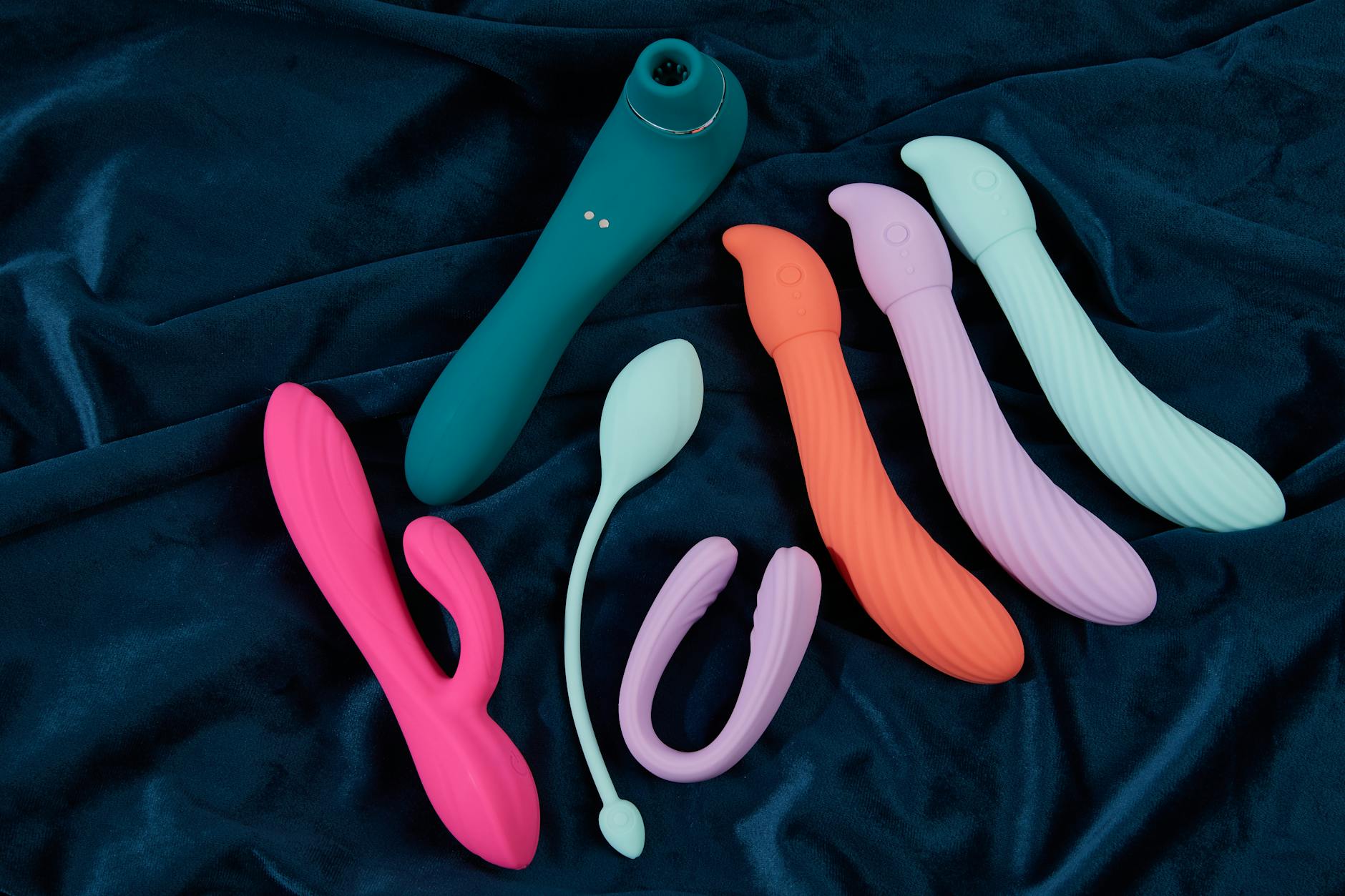
Here's what usually happens (and why it usually backfires)
Someone—usually the person with the vulva—mentions wanting to try a lemon vibrator. The other person hears it as: "You're not doing it right. I need a toy to get off." What was meant as a request for connection gets heard as a rejection. Defensiveness follows. The conversation ends badly. The lemon vibrator never gets mentioned again.
I see this happen over and over in couples' therapy, and it breaks my heart every time because the fix is so simple. The problem isn't that you want to introduce a lemon clitoral vibrator into your sex life. The problem is how the conversation gets framed.
Let's talk about how to do this right.
The frame that works: abundance, not deficit
This is the hardest part to actually do, but it's the whole ballgame. You need to shift your partner's mental model from "my body isn't enough" to "we're adding something that lights us both up."
Here's the difference:
Wrong frame: "I need a vibrator because orgasms are hard for me." (Sounds like: your touch alone doesn't work)
Right frame: "I want to explore what feels incredible to me so I can share that experience with you." (Sounds like: I want us to discover this together)
The second one isn't dishonest—it's just reoriented. You're not trying to get off despite your partner. You're trying to get off with them. A lemon vibrator becomes a tool you both use, not a substitute for them.
When to have the talk (and where)
Don't do this during sex. Don't do it during a fight. Don't do it as a suggestion halfway through intimacy when they're already vulnerable.
Have this conversation when you're both clothed, when you have privacy, and when neither of you is tired or stressed. A Sunday morning coffee is better than 11 p.m. on a Wednesday. A weekend getaway is better than your kitchen while kids are upstairs.
You want attention. You want space. You want them to be able to actually hear you, not just react.
The script (adapt it to your voice, but keep the structure)
Open with desire, not problem-solving:
"I've been thinking about something that would actually feel really good to explore together. Can we talk about it?"
Then name the specific thing:
"I want to try using a lemon clitoral vibrator with you. Not instead of you—with you. I read that a lot of people find that clitoral vibrators change what orgasms feel like, and I'm curious."
Here's the crucial part—ground it in partnership:
"I think it could be fun for both of us. I'd love to figure out how we use it together, when, what feels good. But I wanted to ask you first and hear what you're thinking."
Then stop. Let them respond. Don't fill the silence with reassurance unless they ask for it.
What your partner might actually be worried about
Understand the fear underneath the resistance. They might be thinking:
"Is my touch not enough?" Reassure them: "You absolutely are enough. This is about expanding what we explore together, not replacing you."
"Does this mean something's wrong with our sex life?" Honest answer: "It means I want to learn more about my body and share that with you. That's actually a sign things are good enough that we can experiment."
"Will you prefer the toy to me?" This is the big one. Address it directly: "Different isn't better. A lemon vibrator does one specific thing really well. You do a thousand things. I want both."
"Isn't this weird?" Normalize it: "Millions of couples use clitoral vibrators together. It's actually pretty standard at this point."
If they say no (or need time)
Don't push. Seriously. A resentful yes is worse than a no.
Ask what specifically worries them. Is it the toy itself? The idea of change? Shame about sex toys? Feeling insecure? Each of those needs a different conversation.
Give them time. Sometimes people need to sit with an idea before they're comfortable. That's fine. "I get it. Let's talk about this again in a couple weeks if you want to" is mature and attractive.
You can also offer compromise: "Would you rather we start with something smaller? Or research together first? Or watch something that shows how couples actually use these?" Meeting them halfway shows you care about their comfort, not just your orgasm.
If they're in (the fun part)
Don't launch immediately into logistics. First, get curious together.
"What are you wondering about?" "Do you want to pick one out together?" "Should we read about how people use them or just figure it out as we go?"
This is where a lemon clitoral vibrator becomes an adventure instead of a problem you're solving separately. You're researching together. You're choosing together. You're deciding how and when together.
When you actually use it, check in: "How does this feel? Want me to try a different setting? Should we try this angle?" The toy becomes secondary to the conversation and attention you're giving each other.
The deeper conversation underneath all of this
What I notice in my practice is that couples who struggle with introducing toys usually struggle with asking for what they want in general. A lemon vibrator becomes the symptom, not the disease.
If you can't ask for a toy, you probably can't ask for a different position, more foreplay, specific touch, or anything else. And your partner probably can't either.
So this conversation, if you do it right, is actually about something bigger. It's about practicing how to say "I want something" and have it be safe. It's about learning that desire isn't dangerous. It's about discovering that your partner can handle your needs without falling apart.
That's the real magic. The lemon vibrator is just the vehicle.
FAQ: What partners actually want to know
Q: Will using a vibrator make my partner stop wanting me to touch them?
A: No. If anything, people who use clitoral vibrators with partners report higher satisfaction with partnered sex, not lower. A vibrator doesn't replace human touch. It changes what you're stimulating and how fast you get there. Most people still want their partner involved—they just want the vibrator involved too.
Q: Is it normal to feel insecure about a toy?
A: Completely. A lot of that comes from the assumption that pleasure is zero-sum—if the toy provides something, it takes something away from you. It's not true, but the feeling is valid. Talk about it. Let your partner reassure you. Then actually let the reassurance land instead of arguing with it.
Q: What if I want to use a lemon vibrator but my partner thinks it's weird?
A: Start by figuring out what "weird" means to them. Is it a religious thing? A shame thing? A security thing? A generational thing? Once you know what you're actually working with, you can address it specifically instead of just arguing about vibrators in general.
Q: Can I surprise my partner with a toy, or does it have to be discussed first?
A: Discuss first. Surprise toys create surprise rejection, and that's a wound that takes a while to recover from. The conversation itself is part of the intimacy. Do the work.
Q: What if my partner wants to use a lemon vibrator but I'm hesitant?
A: Listen to what you're actually afraid of. Is it shame? Insecurity? Not knowing how to use it? Once you name the fear, you can address it. Sometimes people are hesitant because they feel like they "should" be enough, which is a story worth examining. Sometimes it's just unfamiliarity, and that goes away with time.
Q: How do we actually integrate a vibrator into sex if we've never talked about it before?
A: Start slow and playful. Don't make it clinical or performative. "Want to see what this does?" is better than "I read we should use this during intercourse." Play around with timing. Some couples use it during foreplay. Some use it during partner sex. Some use it solo and then come back to their partner. There's no right way. You'll figure out what works by actually trying things and checking in.
One more thing: this is actually about desire
Here's what I tell couples in my office: the conversation about introducing a lemon clitoral vibrator isn't really about the toy. It's about whether you can ask for what you want and have it be safe. It's about whether your partner can hear your pleasure as something they want to participate in, not something that threatens them.
If you can have this conversation well, you can have any conversation. If you can ask for a vibrator and have your partner listen and engage, you can ask for intimacy, attention, vulnerability, anything.
So take it seriously. Not in a heavy way, but in a "this matters" way. Your sex life will be better. Your relationship will be better. You'll both feel more seen.
Need help navigating relationship questions? We're here. Hit us up at /contact.