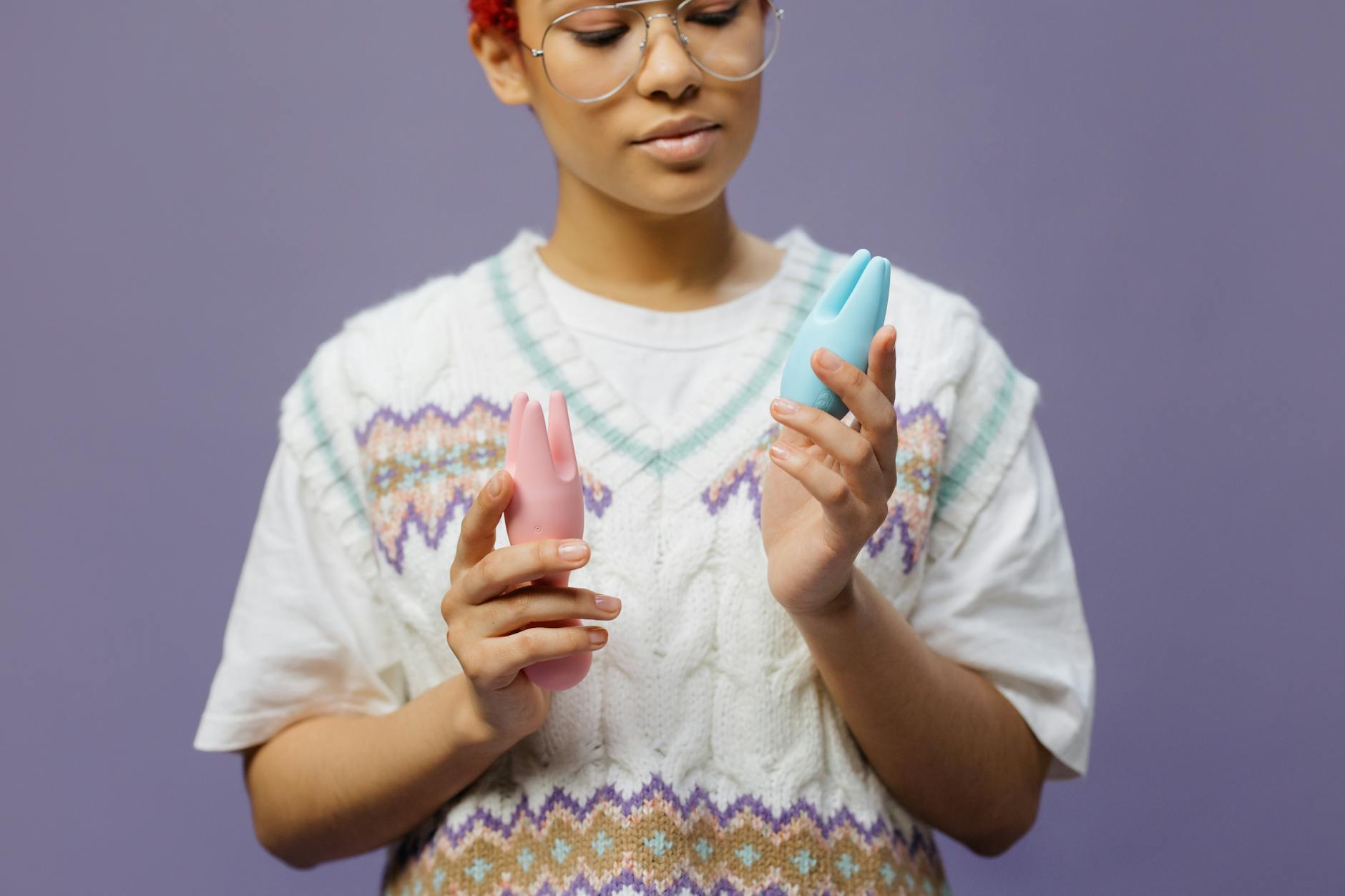
How to Talk to Your Partner About Using a Lemon Vibrator Together
Let's be real: the thought of bringing this up probably feels scarier than actually using the device. Most people I work with spend weeks rehearsing the conversation in their head before they ever open their mouth. And then when they do, they're shocked at how anticlimactic it was.
Here's what I've learned from twenty years of couples therapy. The barrier isn't the conversation itself. It's the story you're telling yourself about what the conversation means.
Why you're nervous (and why that's actually good data)
You're worried about one of three things, usually all at once:
- That they'll think you're unsatisfied with them.
- That they'll think you want someone else.
- That they'll feel replaced or inadequate.
All three of those worries contain the same assumption: that pleasure with a toy somehow subtracts from pleasure with them. It doesn't. But if you don't name that assumption directly, your partner will fill the silence with their own fear, and suddenly you're both defensive about something neither of you actually meant.
Here's the counterintuitive part: the conversation is easier when you lead with vulnerability, not justification.
The framework that actually works
This structure works because it separates three things that usually tangle together: your desire for them, your desire for different sensations, and what you want to try together.
Step 1: Lead with what you want together, not what you want from the toy.
Don't open with "I've been thinking about getting a lemon vibrator." Open with something like: "I've been thinking about how I want to explore more ways to feel good together, and I want to talk about something."
That frame puts you on the same team. You're not shopping for an upgrade. You're designing an experience.
Step 2: Be honest about why, but frame it around sensation, not satisfaction.
Say: "My body responds really intensely to specific kinds of stimulation, and there's this tool that helps me get there faster. I'd love for you to be part of that." Not: "I can't finish without one." Not: "You don't do this the way I need."
One says you're inviting them in. The other puts them in the position of failing you.
Step 3: Name the fear you suspect they might have, and handle it before they do.
Say something like: "I know this might feel weird, and you might wonder if I'm saying something about us. I'm not. This isn't about you not being enough. It's about me knowing my body and asking for what feels good."
That preemptive honesty is the difference between a conversation and a fight. You're showing you understand their potential worry and you're already refusing it.
Step 4: Make it collaborative, not transactional.
Ask: "What do you think? Would you want to try this together?" Give them space to ask questions. Some partners will want to research it. Some will want to know exactly what the experience would look like. Some will need a minute to sit with it. All of that is fine.
The worst thing you can do is rush this step or make them feel like they should be excited immediately. Curiosity and buy-in take time.
What to say when they get quiet
There will probably be a silence. It's not a bad silence. It's just processing.
Don't fill it. Let them ask the question they're actually asking, which is usually hidden under what they say out loud.
If they ask: "Is this because I'm not satisfying you?" They're really asking: "Do you still want me?"
Answer that question, not the surface one. Say: "No. I want you more. I want to feel more with you."
If they ask: "Are you saying you've been faking it?" They're really asking: "Have I been fooling myself about what's happening between us?"
This one needs honesty. If you have been faking it, now is the moment to say so gently. "I've loved being with you, and I also know my body can go deeper. I want to show you that. I want you to see all of me."
If they ask: "Don't you want me to do that for you?" They're really asking: "Are you replacing me with a machine?"
Answer: "I want you to enjoy watching me feel good. I want to explore this with you, not instead of you."
Why some partners resist (and what to do about it)
Resistance usually comes from one of four places, and each one needs a different response.
Shame. They grew up with messages that vibrators are weird or wrong or belong in a different kind of relationship. Your response: "I get that this feels new. Can we approach it as an adventure, not a judgment on what we've been doing?"
Ego. They genuinely believe they should be able to do everything, and a toy feels like a failure. Your response: "This isn't about replacing you. It's about me learning new things about what I like, and wanting you there."
Disconnection. They're not interested in sex much anyway, and this feels like pressure. Your response: This is actually a couples conversation, not a vibrator conversation. The vibrator is surfacing something real that needs real attention.
Different pace. They need more time to warm up to the idea, and you want to move forward now. Your response: Name a timeline. "Can we talk about this again in two weeks?" Having a checkpoint makes waiting feel manageable instead of stalled.
How to actually use it together (the logistics)
Once they're on board, here's what matters: make it stupidly easy to integrate.
Don't overthink the first time. You don't need a whole production. Maybe you're already intimate, and you ask: "Can I try something?" You use the lemon vibrator for two minutes, and then you switch back to what you were doing. That's it. No pressure for it to be transcendent.
Many couples find that having the device out and visible before sex removes some of the weird ceremonial feeling. It's just there, like lube. Practical. Matter-of-fact.
Start with your partner watching, not necessarily involved. Some partners love using it on you. Some want to watch you use it on yourself. Some prefer to hold you while you do. All of those are fine, and they might shift over time.

Photo by cottonbro studio on Pexels
The point is to check in: "What feels good for you?" The conversation doesn't end when you buy the device. It evolves.
The research that backs this up
Here's what couples therapy data actually shows. When one partner brings a toy or different pleasure practice into the relationship, the couples who navigate it best are the ones who treat it as important conversation, not a throwaway ask.
The research is clear: couples who communicate explicitly about desire and pleasure report higher satisfaction overall. This isn't about the vibrator. It's about practicing the skill of saying what you want and hearing your partner's concerns without defensiveness.
You're doing something hard. You're choosing specificity over vagueness, which takes courage. Your partner probably knows that.
The FAQ section
Why does my partner think a lemon vibrator means I want someone else?
Because pleasure, sex, and desire get tangled up in our heads with exclusivity and commitment. A vibrator feels like "proof" that you want something beyond what your partner offers. It's not. It's just physics and nerve endings. But that fear is real, and it needs to be named directly. Say: "Using this doesn't change who I want to be with." Then show them that's true by keeping the conversation open, letting them stay close, and checking in regularly.
What if my partner is angry or feels rejected?
That anger is usually fear wearing a different mask. Don't defend the vibrator. Return to the relationship question: "I want us to feel closer, not further apart. Help me understand what you're worried about." Sometimes people need a minute to realize you're not asking them to change. You're asking them to expand.
Can I use a lemon vibrator if my partner doesn't want one in the bedroom?
Absolutely. You can use it on your own time. But I'd still encourage a conversation about it, because secrets create distance. You don't need his permission. You do need to know whether the issue is about the toy itself, or whether it's pointing to something bigger about how you two talk about pleasure and boundaries. Only one of those problems gets solved by hiding.
How do I introduce the topic if we haven't had sex in months?
This is actually a different conversation. The vibrator isn't the problem. The disconnection is. Before you bring a clitoral vibrator into the picture, you probably need to address what's happened in your sexual relationship more broadly. This might be a moment to consider couples counseling, or at minimum, a deeper talk about what shifted. The device might help later, but it won't fix what's broken right now.
What if they want to control when I use it?
That's a boundary conversation, not a toy conversation. You're allowed to have pleasure on your own terms. If your partner wants to gatekeep your access to your own body and tools, that's a yellow flag worth examining. You can find compromise (maybe you use it together most times, and solo on occasion), but you shouldn't hand over control of your own pleasure.
Does talking about this mean we have relationship problems?
No. It means you have a healthy relationship. Couples who can talk about desire, pleasure, and what they want are actually the ones with the strongest foundations. Vulnerability builds trust. You're not exposing a crack. You're building a bridge.
The bottom line
Your partner might surprise you. They might get curious. They might want to order it together. They might ask questions you didn't expect. That's all data, and it's valuable.
The conversation you're dreading is actually an opportunity to practice one of the most important skills in any long-term relationship: telling the truth about what you want and listening without defensiveness to what they need.
The lemon vibrator is just the vehicle. The real work is the honesty.
If you're ready to have that conversation and you'd like support thinking through what you want to say, reach out. That's what I'm here for.