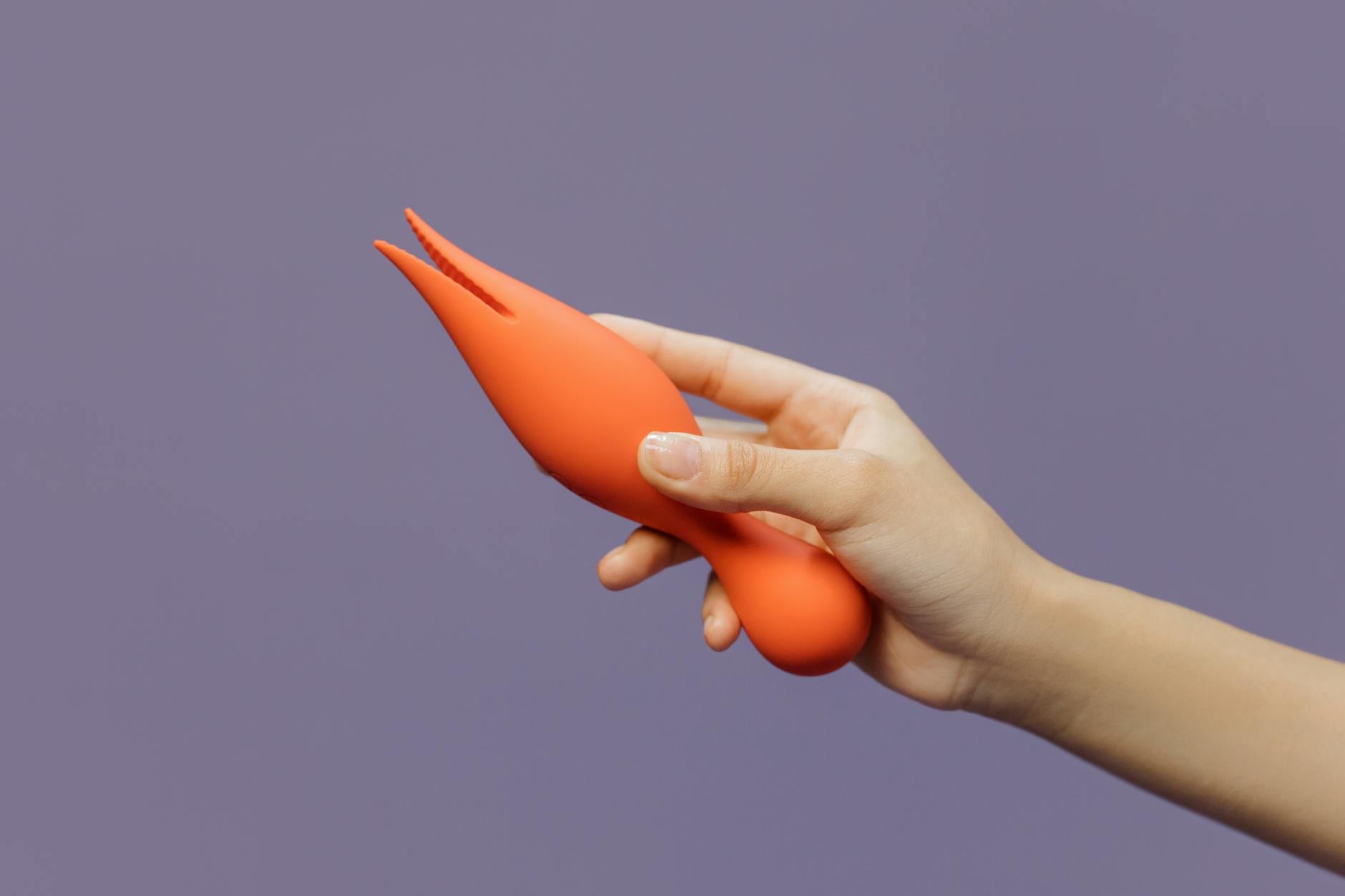
Let's talk about pressure, not vibration
If you've ever felt overwhelmed by a standard vibrator, your tissue wasn't broken. Your nervous system was just being asked to process the wrong kind of stimulation. Here's the thing: your clitoris doesn't need vibration to feel pleasure. It needs something more specific.
The clitoris has roughly 8,000 nerve endings concentrated in an area smaller than a pea. That density is both a gift and a friction hazard. When you use a traditional vibrator, you're asking that delicate tissue to process rapid back-and-forth movement. For some people, that's perfect. For others, it reads as overwhelming, numb, or even painful after a few minutes.
Lemon vibrators work differently. They use suction and gentle pulsing to stimulate those nerve endings without direct friction.
How suction changes the game for sensitive clitoral tissue
Suction creates a microclimate around the clitoris rather than against it. When you use a lemon clitoral vibrator, the seal draws the clitoral glans slightly into the cup, and the pulsing motion creates rhythmic pressure changes. Your tissue is being stimulated from multiple angles at once: the gentle suction pulling, the pulsing pushing, the cup itself providing a contained sensation.
This matters physiologically. Direct vibration requires your tissue to dampen the movement before your nerves can register it. Suction works with your body's natural response system instead of asking it to filter out mechanical stimulation.
The result? Many people report that lemon vibrators feel gentler on sensitive tissue while delivering more intense sensation overall. It's not magic. It's anatomy.
Why friction-based vibration can feel numb over time
One of the most common things I hear is this: "My vibrator felt amazing for two minutes, then nothing." That's not desensitization. That's your clitoris protecting itself.
When tissue experiences sustained direct friction, it goes into a protective response. Your nervous system stops registering the stimulus because it's designed to ignore repeated, unchanging input. This is why you can wear a watch all day without feeling it. Your clitoris is smarter than you think. It's telling you that straight vibration isn't the right tool for your particular wiring.
With lemon vibrators, the suction-and-pulse pattern is varied by design. The pressure changes, the angle shifts slightly, the sensation pulses rather than hums continuously. Your nervous system stays engaged because the stimulus isn't monotonous.
The tissue thickness factor
Clitoral tissue varies person to person. Some people have naturally thicker outer tissue. Others have tissue that's more delicate or thinner, especially if they've gone through hormonal shifts, medical procedures, or certain medications. Thinner tissue is more prone to irritation from sustained direct vibration.
Suction-based stimulation distributes pressure over a larger area rather than concentrating it on a tiny point. If your tissue is naturally sensitive or has become thinner due to hormonal changes, a lemon clitoral vibrator is often gentler while still delivering real sensation.
This is also why many people find that lemon vibrators work better after life events like menopause, medication changes, or recovery from medical procedures. The tissue is asking for a different kind of stimulation, and suction delivers it.
The sensation paradox: gentler can feel stronger
Here's where it gets interesting. Many people assume that gentler means less intense. That's not how lemon vibrators work.
Because suction engages your clitoris in a three-dimensional way rather than one-directional friction, the sensation often feels stronger and more localized despite being gentler on the tissue itself. You're not asking your body to filter out friction. You're engaging your nerve endings directly.
I've had clients describe the feeling as "more focused" or "like the vibration is happening inside rather than on the surface." That's your nervous system actually getting a clear signal instead of being asked to process conflicting sensations.
Positioning and control: another advantage
With traditional vibrators, you're often stuck repositioning constantly to find the right angle. Too much direct pressure hurts. Move slightly and you lose sensation. It becomes a fidgety, mentally exhausting process.
The cup design of a lemon vibrator creates a stable seal that you can control with light pressure. You're not constantly adjusting to find the sweet spot. The stimulation is consistent because the geometry is consistent. That stability matters, especially if you have sensitive tissue or pelvic tension.
When sensation is off but you're not sure why
If you've been using a traditional vibrator and finding it either overwhelming or underwhelming, the issue often isn't your body. It's the tool. Your clitoris might be telling you that it needs a different approach.
Some signs that a lemon clitoral vibrator might work better for you: sensation feels dull after a minute or two, direct vibration feels irritating rather than pleasurable, you need constant repositioning, or you find yourself numb but not satisfied. These aren't problems with your capacity for pleasure. They're signals that your tissue responds better to suction than friction.
Try starting with a lower pattern if you're new to suction. The lemon vibrators offer multiple intensity levels for exactly this reason. Your clitoris is sensitive by design. That's not a liability. It means you're capable of profound sensation once you find the right approach.
The hydration piece (yes, really)
Sensitive clitoral tissue benefits from lubrication, and suction creates its own microclimate that can feel drier than you'd expect. Using a water-based lubricant with any clitoral vibrator is smart. With lemon vibrators on sensitive tissue, it's nearly essential.
The lube isn't just comfort. It helps the seal work better and reduces any potential for tissue irritation. Think of it as part of the system, not an extra step.
What happens with consistent use
One of the best parts about lemon vibrators for sensitive tissue is that they don't cause the numbness spiral that friction-based vibration can trigger. Because the stimulation pattern is varied and you're not asking your tissue to dampen mechanical movement, your sensitivity often stays stable or even improves.
Many people report that after using a lemon vibrator for a few weeks, they actually feel more sensation during partnered sex and everyday life. That's because you're not fatiguing your nerve endings. You're training them to respond to a different, more natural pattern of stimulation.
Your pleasure isn't broken. You've just been using a tool that doesn't match your particular wiring. Lemon vibrators are built for tissue that responds better to suction, and if you're reading this, you might be exactly that person.
FAQ
Why do lemon vibrators feel different from regular vibrators?
Lemon vibrators use suction and pulsing instead of vibration alone. The suction creates rhythmic pressure changes that engage your clitoris without direct friction. For sensitive tissue, this means stimulation that feels stronger while being gentler on delicate nerve endings. The sensation pattern is also varied by design, which keeps your nervous system engaged rather than triggering the protective numbness that sustained vibration can cause.
Can lemon clitoral vibrators help if I have numb sensation?
Often, yes. Numbness with traditional vibrators usually isn't true desensitization. It's your tissue responding to sustained friction by tuning out. Because lemon vibrators use a different stimulation pattern, many people find sensation returns quickly. Start with lower intensity levels and give yourself a few sessions to adjust. If numbness persists beyond a week or two, it might be worth checking in with a healthcare provider about other factors.
Are lemon vibrators safe for very sensitive tissue?
Absolutely. The suction design actually makes them safer for delicate tissue than high-powered friction vibrators. The key is starting with lower intensity and using lubrication. The seal is gentle and distributes pressure evenly. If you have a condition like vaginismus or clitoral pain, consult with a healthcare provider, but lemon vibrators are often recommended specifically because they're less irritating.
Do I need to use lube with a lemon vibrator if I have sensitive tissue?
Yes. Lubrication helps the seal work better and reduces any potential for micro-irritation on sensitive tissue. Use a water-based lube compatible with your toy. The lube isn't just comfort. It's part of how the stimulation works optimally.
How long does it take to adjust to suction if I've only used vibrators before?
Most people adjust within a session or two. Start with pattern 1 or 2 and spend a few minutes exploring. Suction feels different, and that's intentional. Your clitoris might need a minute to recognize the sensation as pleasurable rather than novel. Many people find that by the second or third use, suction feels more natural and more satisfying than what they were using before.
If lemon vibrators work for sensitive tissue, will they feel weak for people with less sensitive clitorises?
Not necessarily. The sensation is different, not weaker. Some people find it stronger because it's more focused. If you have less sensitive tissue and prefer direct stimulation, a traditional vibrator might still be your preference. But many people across the sensitivity spectrum actually prefer lemon vibrators once they try them. The key is that suction works differently, and different isn't less effective. It's just different.
The bottom line
Sensitivity isn't a problem. It's information. Your clitoris is telling you what kind of stimulation actually works for your particular anatomy and nervous system. If traditional vibrators leave you numb, overwhelmed, or constantly repositioning, a lemon clitoral vibrator offers a completely different approach.
Your pleasure matters. And you deserve a tool that's built for how your body actually works. If you have questions about whether lemon vibrators are right for you, we're here to help. Reach out to the team at /contact and let's find what works.