The thing nobody tells you about this conversation
Introducing a lemon vibrator to your partner isn't actually the problem. The problem is that you've built it up in your head as this huge vulnerability reveal, so by the time you say anything, you're carrying three months of anxiety in one sentence. That makes it awkward. Not the vibrator. You.
Let's fix that.
Why you're nervous (and why your partner probably isn't)
Honestly, the fears I hear most often are: "They'll think I'm not satisfied" or "They'll think I want someone else" or "It'll make them feel inadequate." All three are rooted in the same misconception. A lemon clitoral vibrator isn't a criticism of your partner. It's a tool. Like lube. Like your hands. Like positioning. Your partner's penis or fingers or whatever your partner brings to the table is wonderful and will remain wonderful. This is addition, not replacement.
Here's the data twist: research from the Journal of Sexual Medicine found that couples who use sex toys together report higher satisfaction and better communication overall. Not lower. Better. Because introducing a toy requires you to actually talk about what you want, and that conversation builds intimacy, not resentment.
Your partner is probably not thinking about your hypothetical lemon vibrator at all. You're the one who's been researching clitoral vibrators at midnight.
The timing matters more than you think
Don't bring this up during sex. Don't bring it up when either of you is stressed, tired, or distracted. Don't message it. Have the conversation when you're both calm, clothed, and can actually think.
Ideally, bring it up at a moment when you're already connected but not actively intimate. After a good dinner. On a walk. Somewhere neutral. This signals that it's just a regular conversation, not a Big Deal conversation. Because it shouldn't feel like one.
What to actually say (three approaches)
Approach 1: The straightforward ask
"I've been thinking about trying a lemon vibrator. I'd really like to explore this with you. Are you open to it?"
That's it. You're not apologizing. You're not over-explaining. You're not asking permission from an authority figure. You're inviting your partner into something you want.
Approach 2: The curiosity framing
"I read something interesting about clitoral vibrators and how they can feel different than other types of stimulation. I'm curious to try one. Would you want to experiment with me?"
This works well if your partner responds better to intellectual framing. You're not saying "I need this because something's wrong." You're saying "I'm interested in exploring this together."
Approach 3: The pleasure-focused angle
"I want to feel more pleasure in our sex life, and I think a lemon vibrator might help with that. I'd love to try it with you because I want you to be part of making me feel good."
This one centers your partner's role. You're not replacing them. You're inviting them deeper into your pleasure.
Pick whichever one matches your relationship style. All three work.
What your partner might say (and how to respond)
"Will I not be enough anymore?"
"You're not in competition with a toy. Your hands, your mouth, your presence all matter. A vibrator just adds something different. Think of it like how great restaurants use both salt and spices. One doesn't mean the other was wrong."
"Isn't that weird?"
"Not at all. Lots of couples use them. But more importantly, we get to decide what's normal for us, not what's normal for anyone else."
"I don't know. I need to think about it."
"Totally fair. No rush. Let me know what questions come up."
Don't push. If your partner needs time to sit with the idea, let them. The worst thing you can do is treat this like you need a yes immediately. You don't. You're building a life together. A week or a month of thinking is fine.
The first time you actually use it together
Start slow. Introduce the lemon vibrator during foreplay, not as the main event. Use it on yourself first while your partner watches, or have them use it on you while you guide them. This takes the pressure off both of you.
Low expectations are your friend here. You're not trying to have the best orgasm of your life. You're just exploring. If it feels good, great. If it feels a little weird at first, also great. Novelty takes a few tries to feel natural.
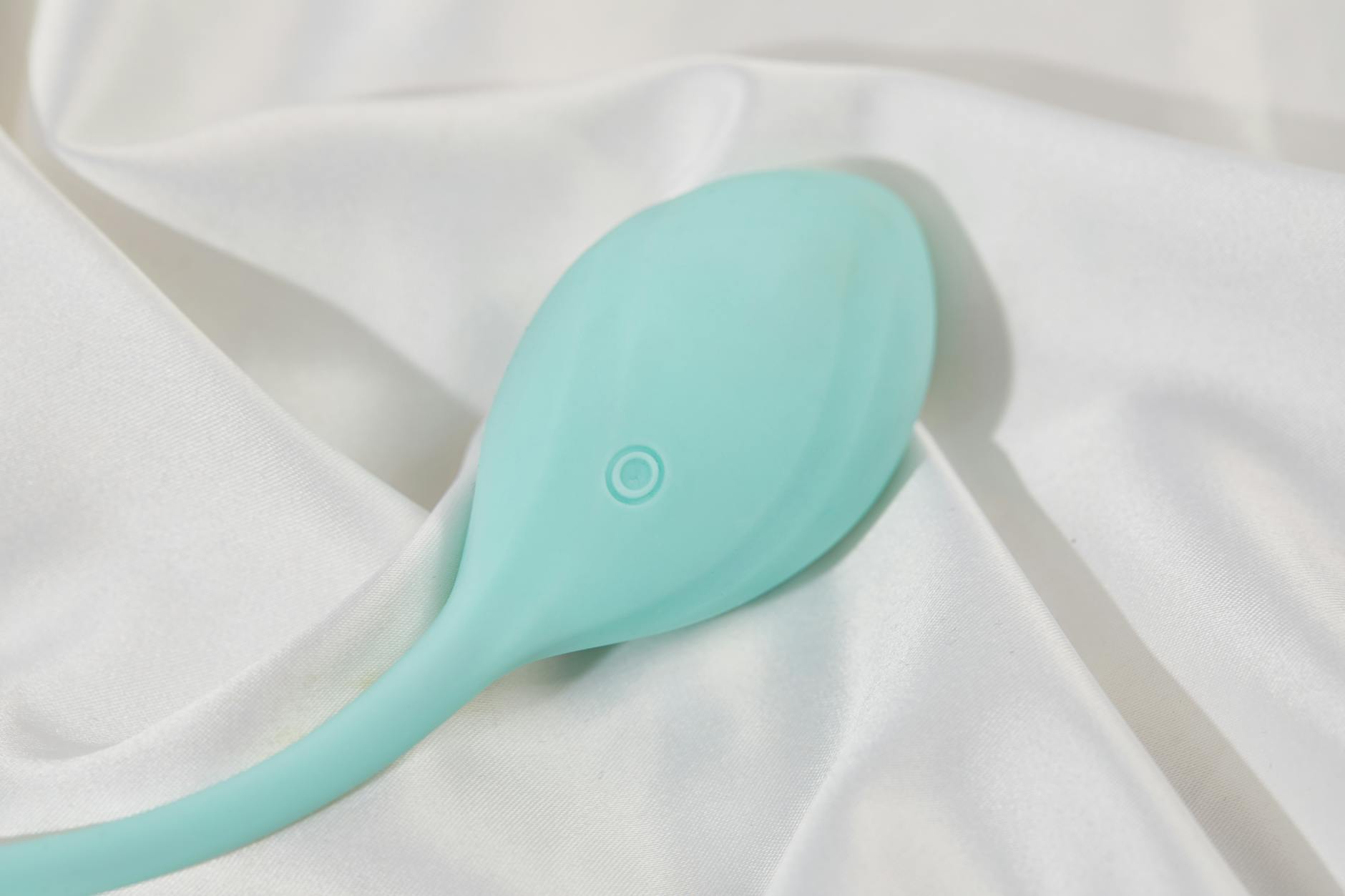
Photo by IFONNX Toys on Pexels
The conversation nobody expects: lube and comfort
Before you even turn the vibrator on, talk about lube. A water-based lubricant isn't optional if you want this to feel good. It's essential. Your partner should know that upfront. This isn't a failure state. It's just how your body works with vibration. Many people need lube with clitoral stimulation regardless of what's doing the stimulating.
Also talk about intensity. Lemon vibrators come with different settings. Start at level one or two. You might think you want maximum intensity, but air suction devices like the Lem work differently than traditional vibrators. The sensation builds. Give it time.
If your partner says no
This is the part where I'm going to be direct with you. If your partner says no and won't discuss it further, that's information. Not necessarily bad information. But it's something you two need to actually talk about.
Do they think sex toys are inherently wrong? Do they have specific concerns about this particular device? Are they worried about their role in your pleasure? Is there something else going on in the relationship that's making them defensive?
You can't move forward without understanding the actual objection. "I'm not comfortable" is a starting point, not an ending point. Ask what would make them more comfortable. Is it reading about how lemon clitoral vibrators actually work? Is it looking at them together first? Is it trying it with you present and vulnerable?
If your partner is truly unwilling to engage with your needs around pleasure, that's a bigger conversation than the vibrator. That might be worth some couples counseling, honestly. Because you deserve to have your desires matter in your relationship.
Why this works better than you think
Most couples avoid this conversation because they think it's risky. Actually, avoiding it is riskier. When you don't talk about what you want, your partner stays locked out of your inner life. You start feeling unseen. Resentment quietly builds.
When you do have this conversation, you're saying something much bigger than "I want to try a sex toy." You're saying "I trust you with my vulnerability" and "I want you to know me fully" and "I'm willing to ask for what I need." That's intimacy. That's connection.
The lemon vibrator is just the vehicle.
FAQ: The questions people actually ask
Should I buy the vibrator before or after the conversation?
After. Tell your partner you want to try one, get their buy-in, and then pick one together if possible. This removes the "surprise sex toy appearance" awkwardness and makes it collaborative. If your partner wants to see options, you can look at the Hello Nancy product line together. The Lem is designed for both solo and partnered play.
What if my partner wants to buy one but I'm hesitant?
Same conversation, reversed roles. Listen to why they're interested. There's no shame in needing time to adjust to the idea. You're not obligated to use it, but you might explore what the underlying desire is. Are they wanting more pleasure for you? More variety? More connection? Understanding the "why" often makes the "what" feel less threatening.
Can I use a lemon vibrator if I have a new partner?
Yes, but maybe wait until you've established some baseline trust and communication. This isn't a first-date conversation. But by month two or three, when you're already intimate, it's a totally reasonable topic to explore with someone new.
How do I know if my partner is just saying yes to make me happy?
You don't, not immediately. But you'll know after you try it. If your partner is genuinely uncomfortable, that discomfort will show up. They might tense up. They might go quiet. They might avoid the situation next time it comes up. If you notice that, circle back and give them actual permission to be honest. "I want you to be genuinely interested in this. If you're not, that's okay. We don't have to do it."
What if we try it and it's awkward?
Most things are awkward the first time. That's normal. The fact that you're both willing to try something new together is what matters. Awkwardness usually melts away by the second or third time. And honestly, sometimes the awkwardness is kind of funny. You can laugh about it together and try again.
Is it okay to use a lemon clitoral vibrator if my partner and I don't usually talk about sex?
That's actually your sign that you need to start. You don't have to become sex therapists. But you do need basic communication about what you both want and need. A vibrator isn't the thing that will magically create that. But trying to introduce one might push you to finally have the conversation you've been avoiding. That's not a bad thing.
The real thing you're building
This conversation isn't just about a lemon vibrator. It's about building a relationship where you can ask for what you want. Where your partner sees you fully. Where pleasure matters. Where vulnerability is safe.
Start with the vibrator if you want. But stay for the intimacy.
If you're still nervous, read through how to talk to your partner about using a lemon vibrator together for additional frameworks. And if you want to understand more about how lemon vibrators work differently than traditional toys, air suction versus traditional vibration breaks down the actual mechanics. Knowledge often kills anxiety.
You've got this. And your partner probably will too, once you give them the chance.